A fifth of its length
Its skull was about 1.5 metres long, with jaws full of thick, pointed teeth.
In the sea · Sea reptiles
Smooth-sided tooth · LIE-oh-PLOOR-oh-don
A powerful sea reptile with a huge head, a short neck and four big flippers.
Powers after you. Move your pointer and see.
To scale
The bars are drawn to the same scale. On these pages the animals are sized in proportion to each other as far as a screen allows: the giants are shrunk a little and the smallest are enlarged, so that you can see them all.
Good to know
Its skull was about 1.5 metres long, with jaws full of thick, pointed teeth.
It was the top hunter in the seas of Jurassic Europe.
Water flowed through its nostrils as it swam, so it could scent prey from a distance.
A television series showed it 25 metres long. The real animal was about a quarter of that.
Four big flippers gave it tremendous acceleration over a short distance.
It belongs to the pliosaurs: plesiosaurs with short necks and big heads.
The real thing
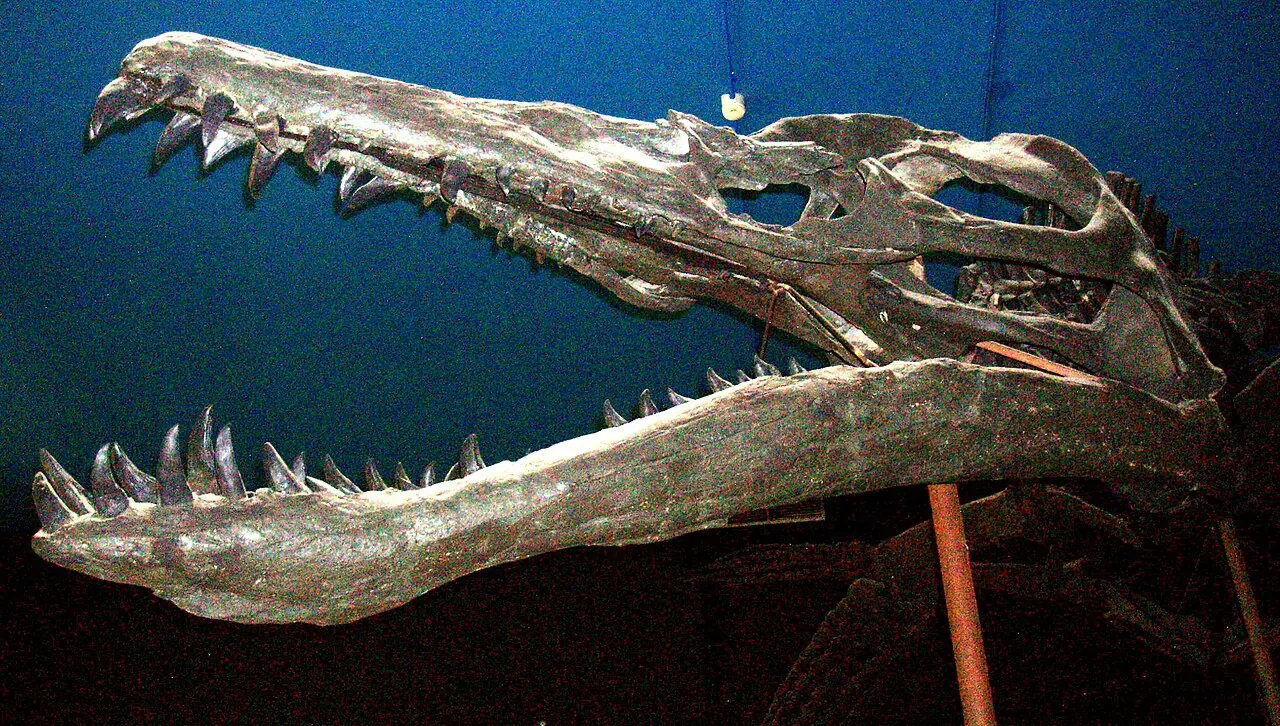
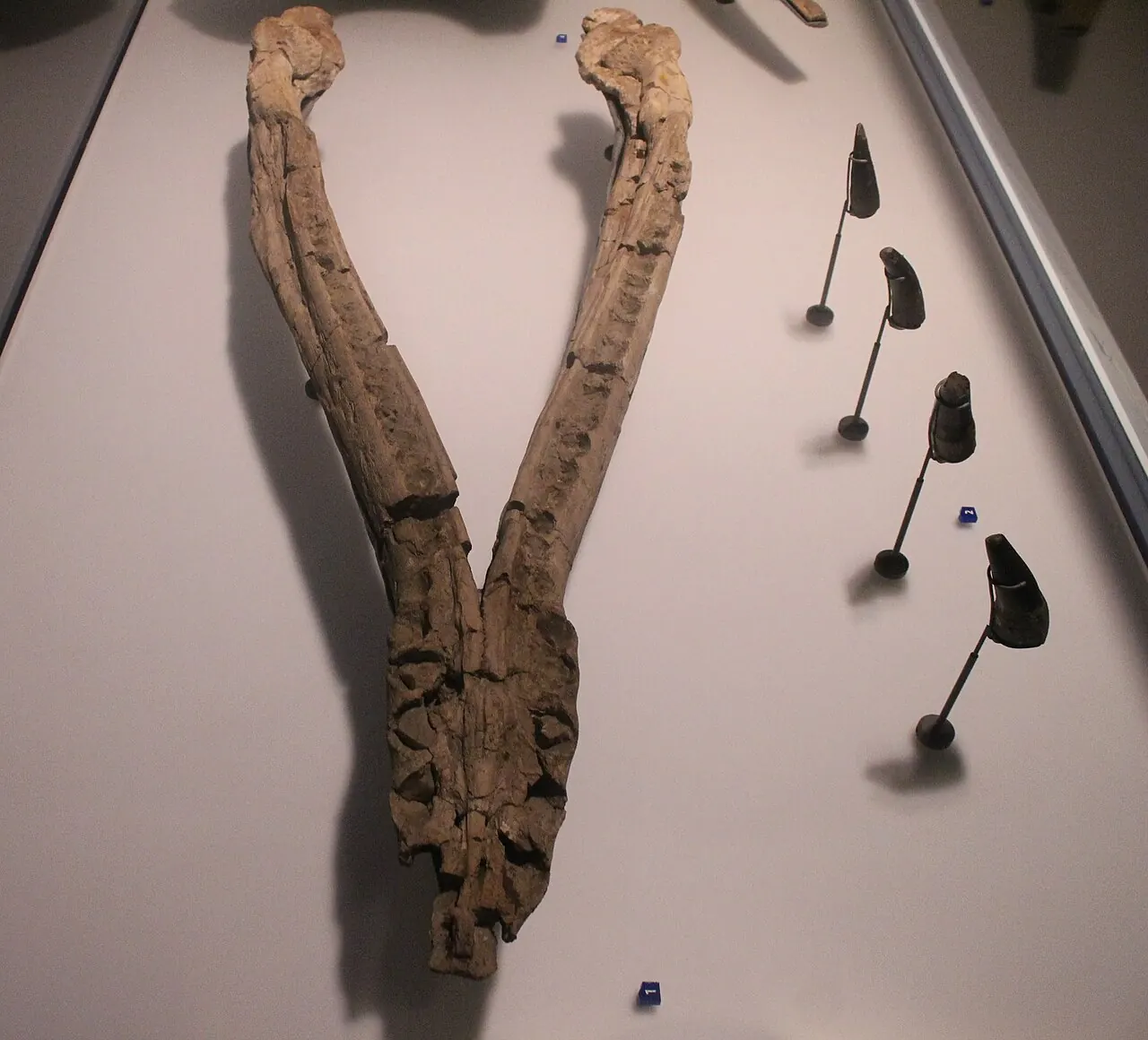
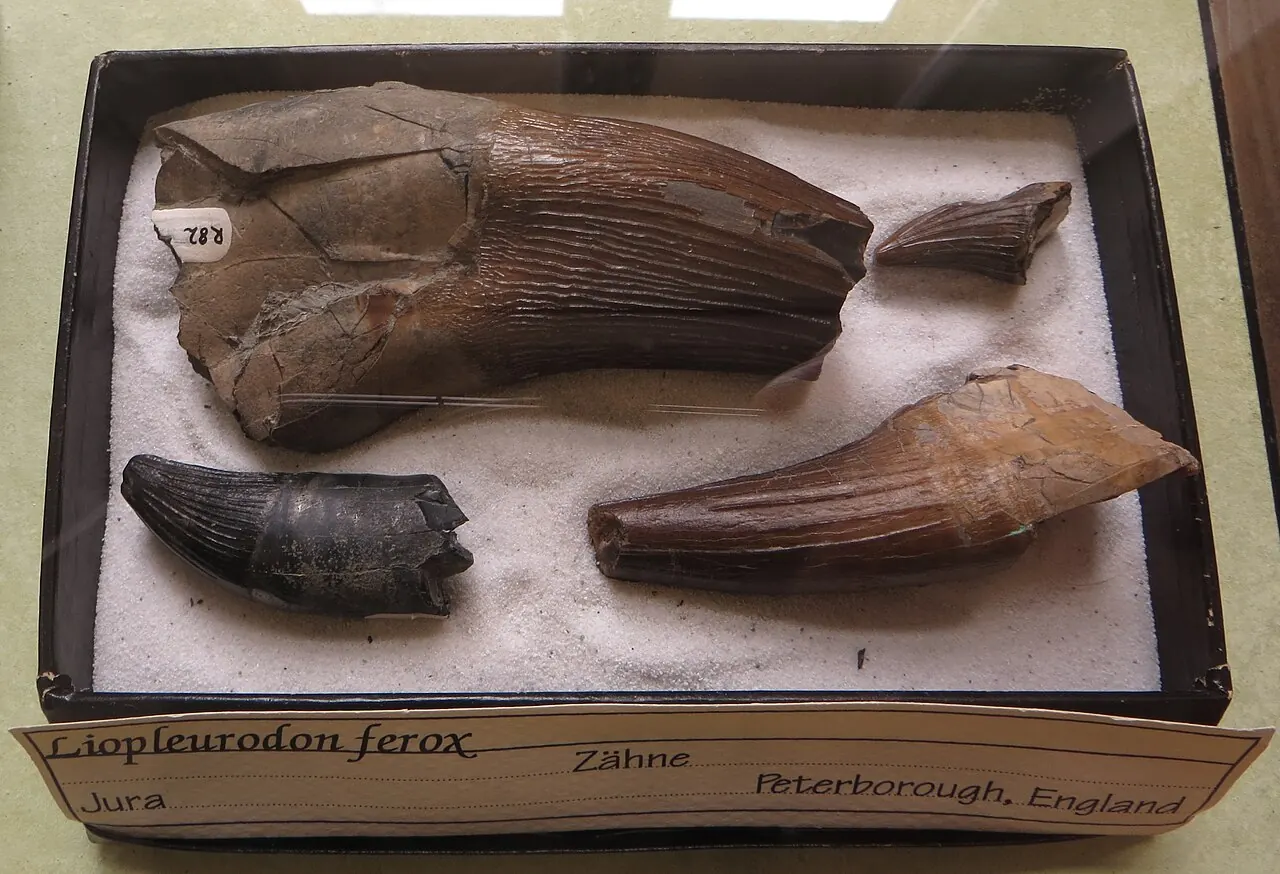
Photos are from Wikimedia Commons, used under the free licences shown. They have been resized, and cropped where they appear in link previews.
Large fish, ichthyosaurs and other sea reptiles.
It was named in 1873 from a single tooth. Skeletons have since been found in England and France.
Keep going
These live somewhere else: choosing one takes you to their page.
Animals from other periods live on their own pages: choose another.


