A crest like a trombone
The crest was hollow, with air passages running up from the nose and back down again.
The plant-eaters · Beaked plant-eaters
Near crested lizard · PA-ra-saw-ROL-off-us
A duck-billed dinosaur with a long, hollow, curved crest sweeping back from its head.
Strolls after you. Move your pointer and see.
To scale
The bars are drawn to the same scale. On these pages the animals are sized in proportion to each other as far as a screen allows: the giants are shrunk a little and the smallest are enlarged, so that you can see them all.
Good to know
The crest was hollow, with air passages running up from the nose and back down again.
Scientists have built models of the crest. Blown through, they give a deep, booming note.
The crest could be 1.8 metres long, counting the skull.
It grazed on all fours and ran on its hind legs.
Like all duck-bills it had batteries of hundreds of teeth for grinding plants.
A young one found in 2009 by a schoolboy shows the crest starting to grow as a small bump.
The real thing
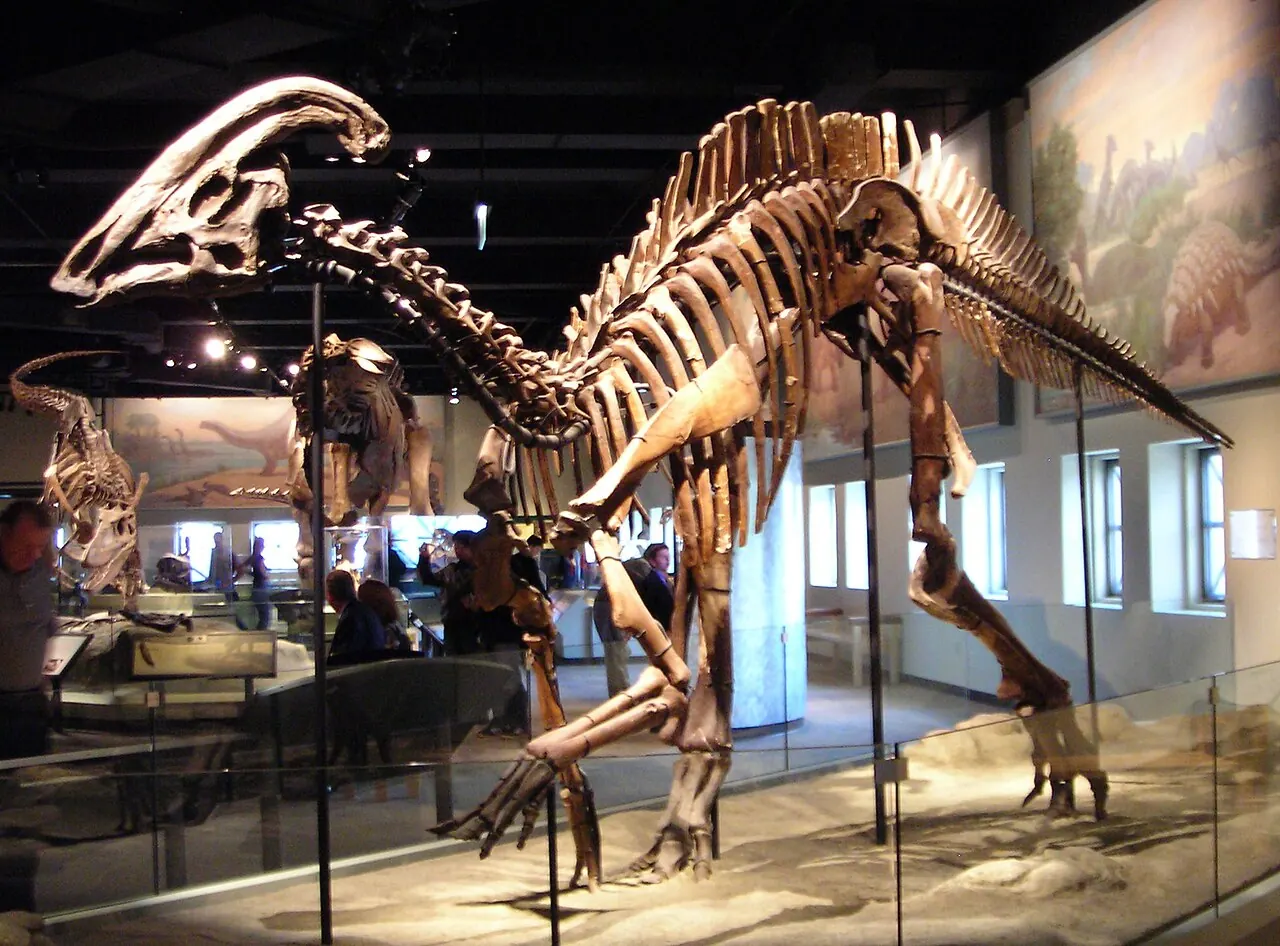
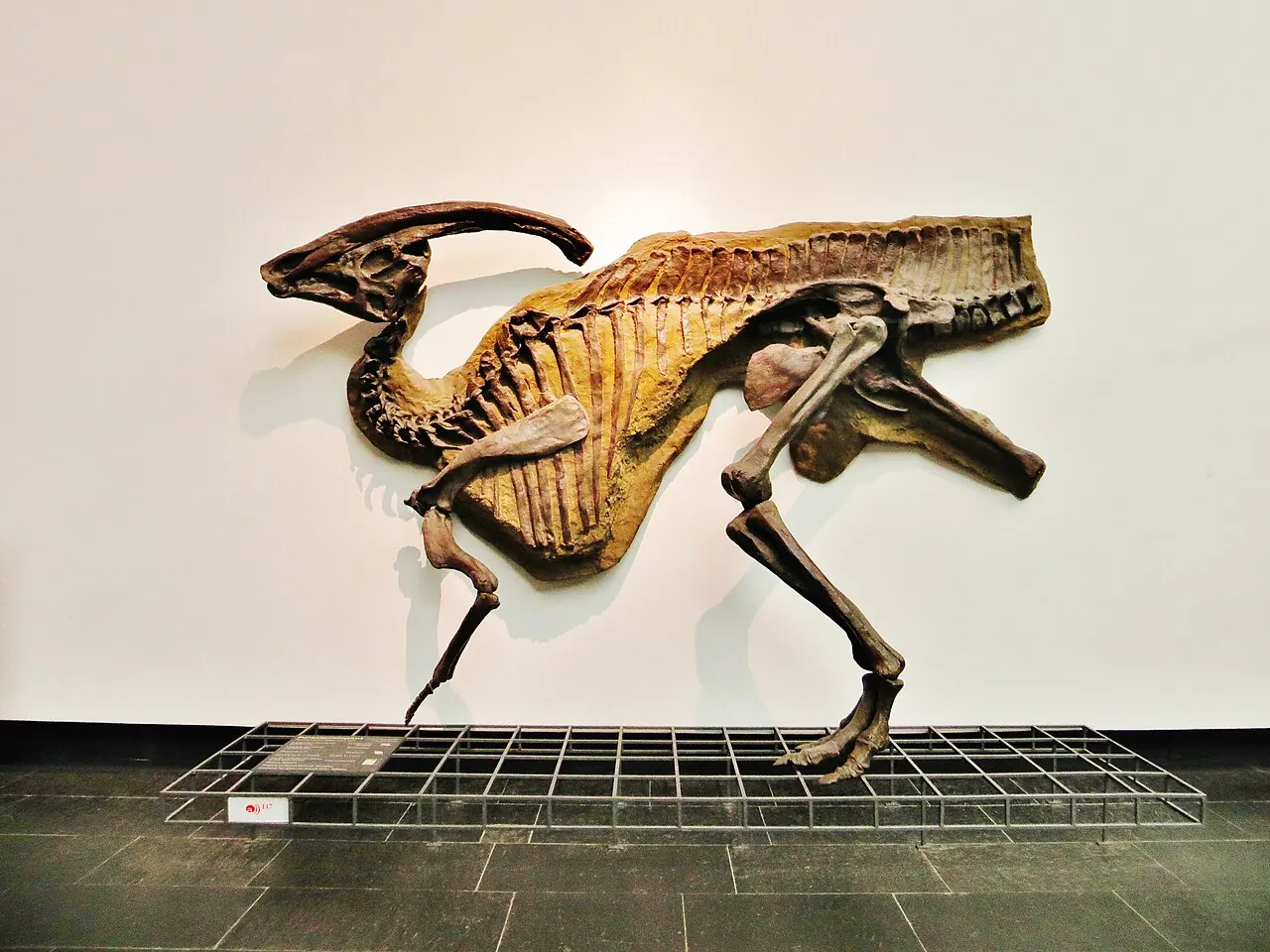
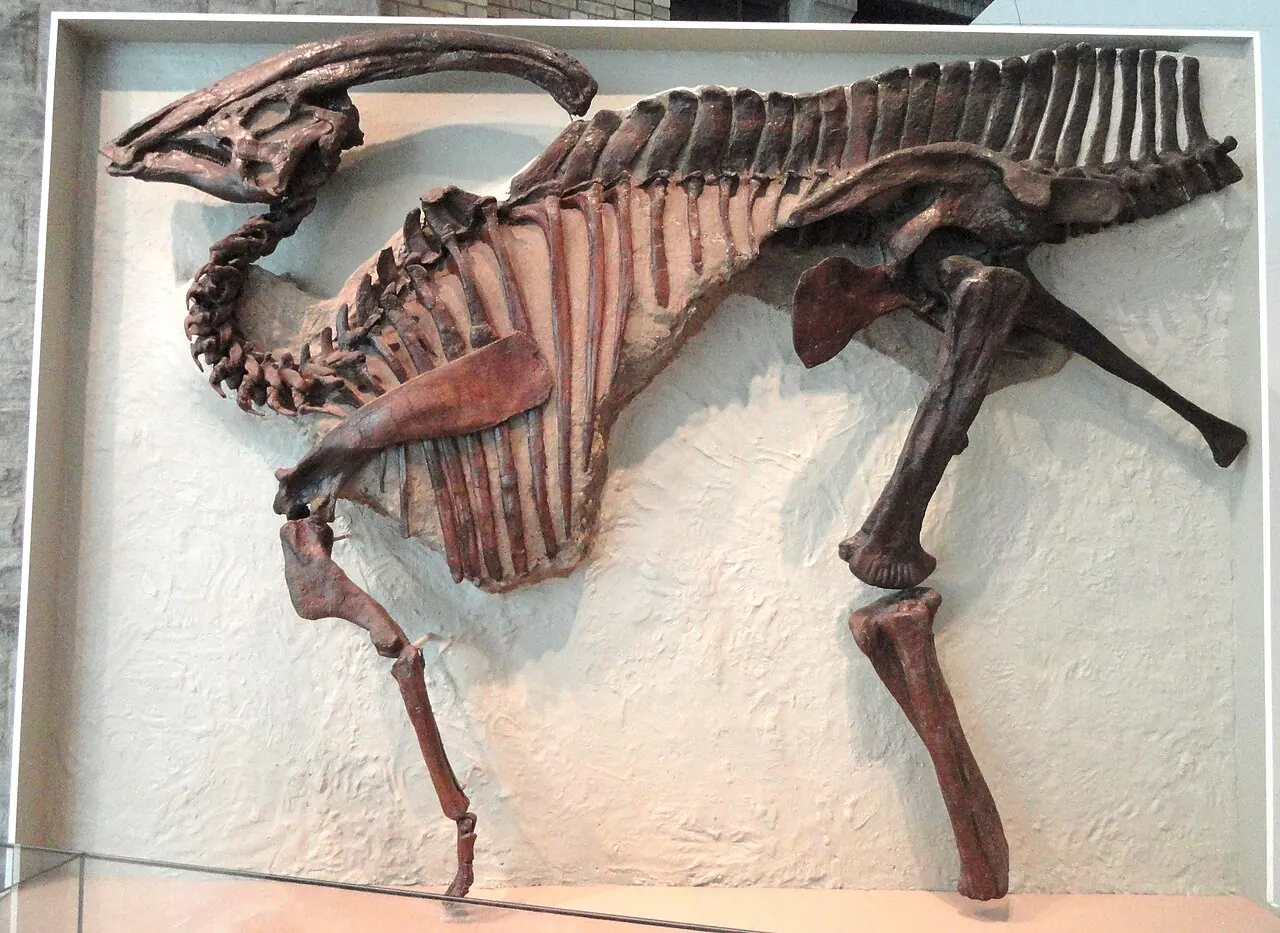
Photos are from Wikimedia Commons, used under the free licences shown. They have been resized, and cropped where they appear in link previews.
Leaves, twigs and pine needles.
Only a few skulls are known. Medical scanners have been used to map the tubes inside the crest.
Keep going
Animals from other periods live on their own pages: choose another.


