A horn on its nose
The thin, blade-like nose horn was probably for display, not for fighting.
Jurassic giants · Theropods
Horned lizard · seh-RAT-oh-SORE-us
A medium-sized hunter with a horn on its nose, a small horn over each eye and a row of bony studs down its back.
Prowls after you. Move your pointer and see.
To scale
The bars are drawn to the same scale. On these pages the animals are sized in proportion to each other as far as a screen allows: the giants are shrunk a little and the smallest are enlarged, so that you can see them all.
Good to know
The thin, blade-like nose horn was probably for display, not for fighting.
A single row of small bony plates ran down the middle of its back, which is unusual in a meat-eater.
Its upper teeth were so long that they reached below the lower jaw when its mouth was shut.
Its tail was tall and flexible. It may have been a good swimmer.
Its teeth are often found near ancient rivers and lakes.
It was smaller and rarer than Allosaurus and probably hunted different prey.
The real thing
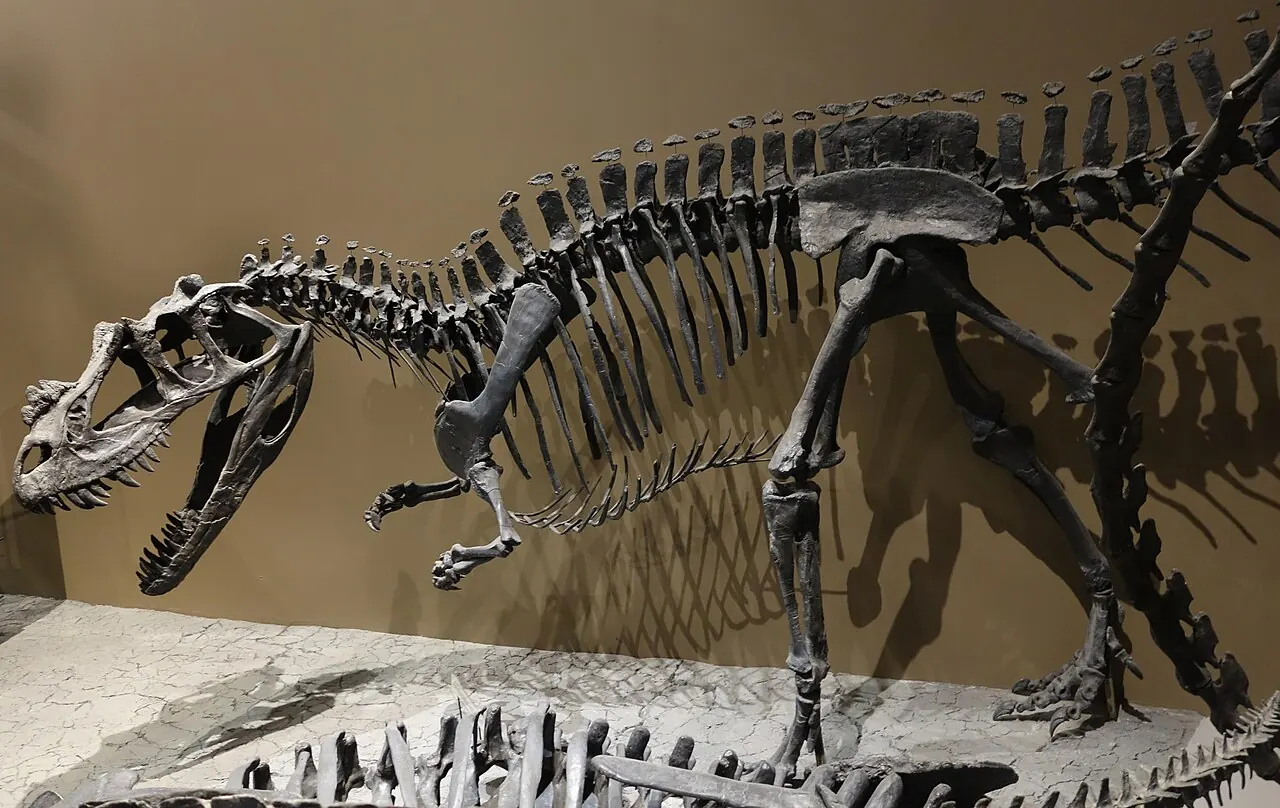
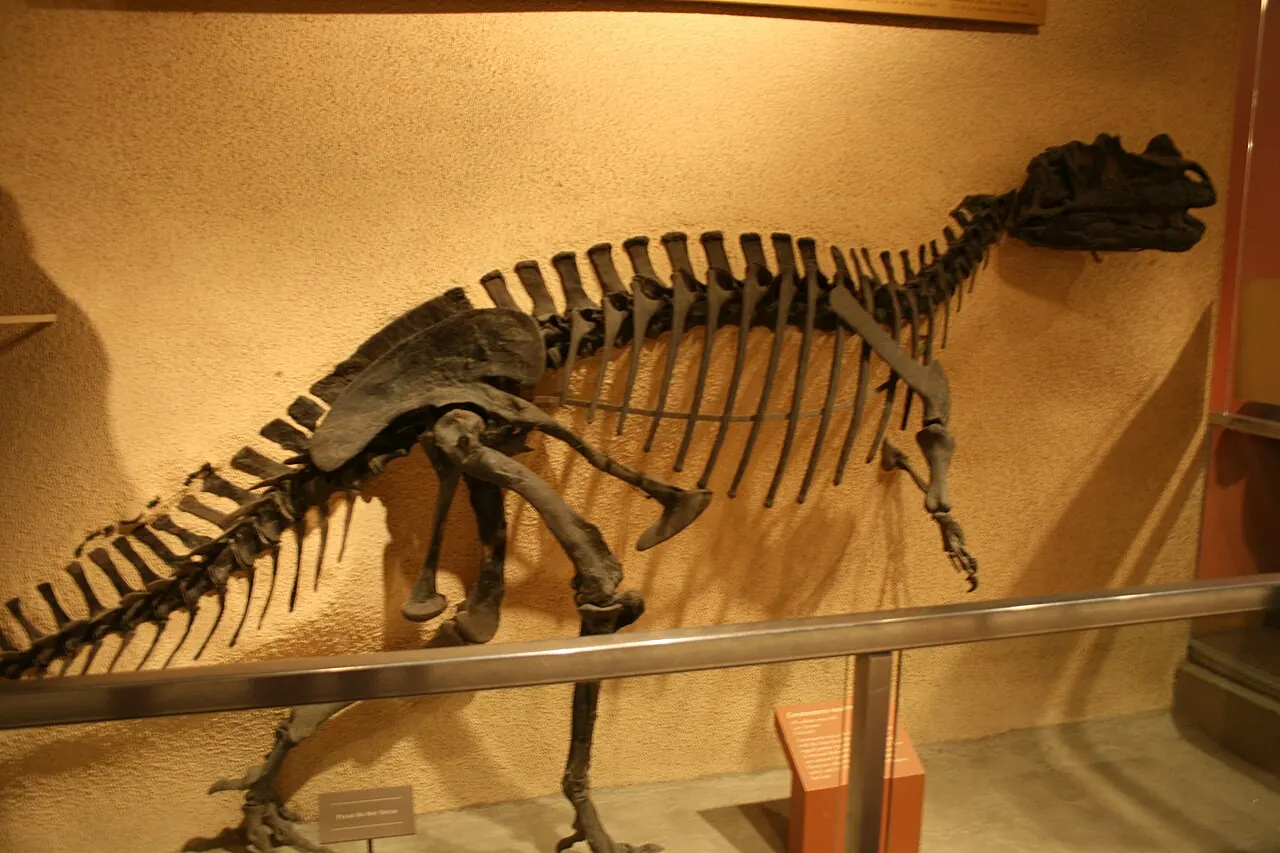
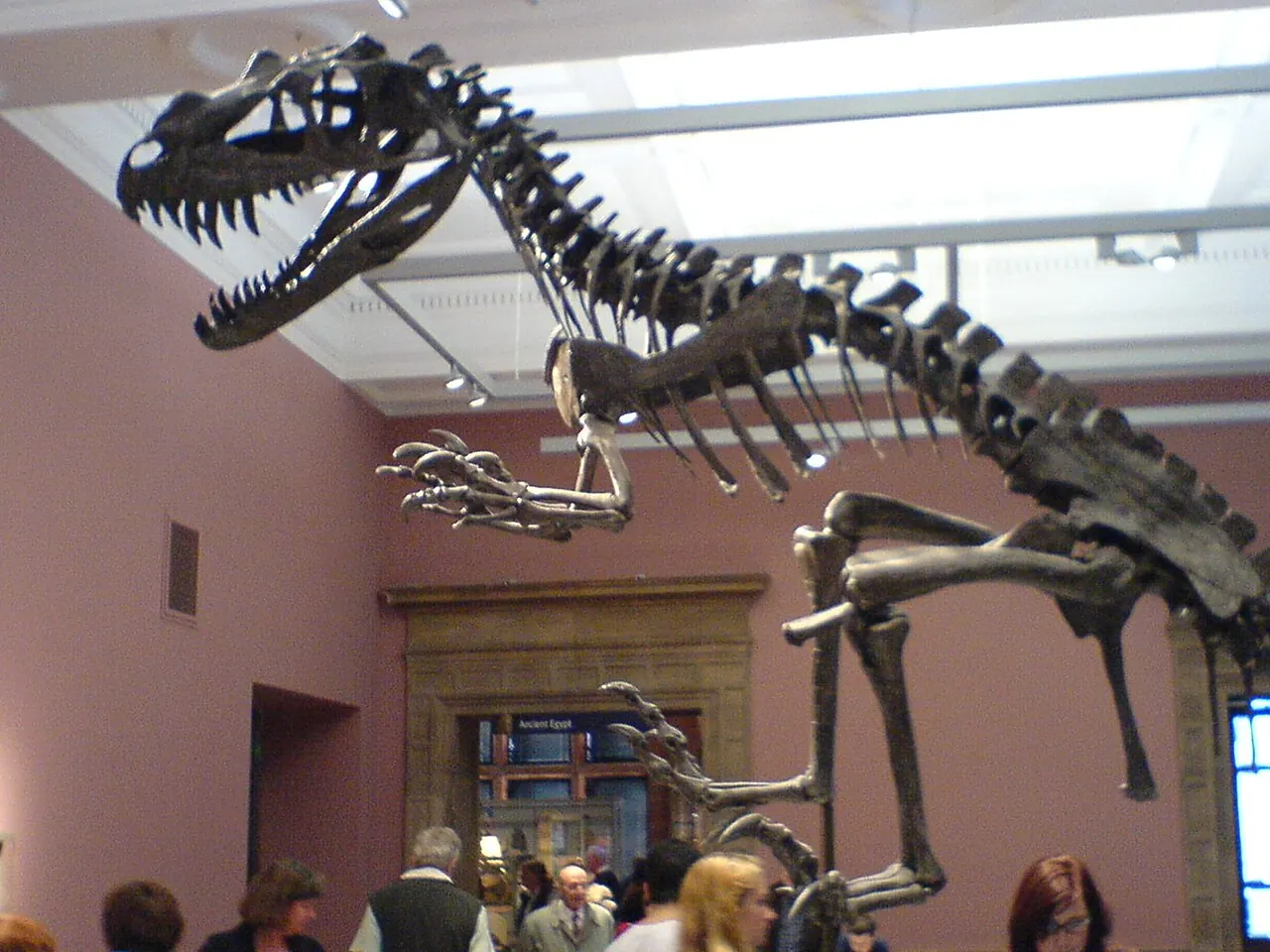
Photos are from Wikimedia Commons, used under the free licences shown. They have been resized, and cropped where they appear in link previews.
Smaller dinosaurs, and perhaps fish, turtles and crocodiles from the water's edge.
The first skeleton was found in Colorado in the 1880s and was almost complete.
Keep going
Animals from other periods live on their own pages: choose another.

.jpg)
