What were the plates for?
Probably for display, and perhaps for warming up and cooling down. They were too thin to be armour.
Jurassic giants · Plated and armoured dinosaurs
Roof lizard · STEG-oh-SORE-us
A big plant-eater with a tiny head, two rows of upright plates down its back and four spikes on its tail.
Ambles after you, plates up. Move your pointer and see.
To scale
The bars are drawn to the same scale. On these pages the animals are sized in proportion to each other as far as a screen allows: the giants are shrunk a little and the smallest are enlarged, so that you can see them all.
Good to know
Probably for display, and perhaps for warming up and cooling down. They were too thin to be armour.
The spiked tail is called a thagomizer, a name that began as a joke in a cartoon. An Allosaurus bone has a hole that fits a spike exactly.
Its brain was about the size of a lime, in a body the size of a bus.
The man who named it thought the plates lay flat on its back like roof tiles.
The most complete Stegosaurus ever found, nicknamed Sophie, is on show at the Natural History Museum in London.
Stegosaurus lived further back in time from Tyrannosaurus than Tyrannosaurus does from us.
The real thing
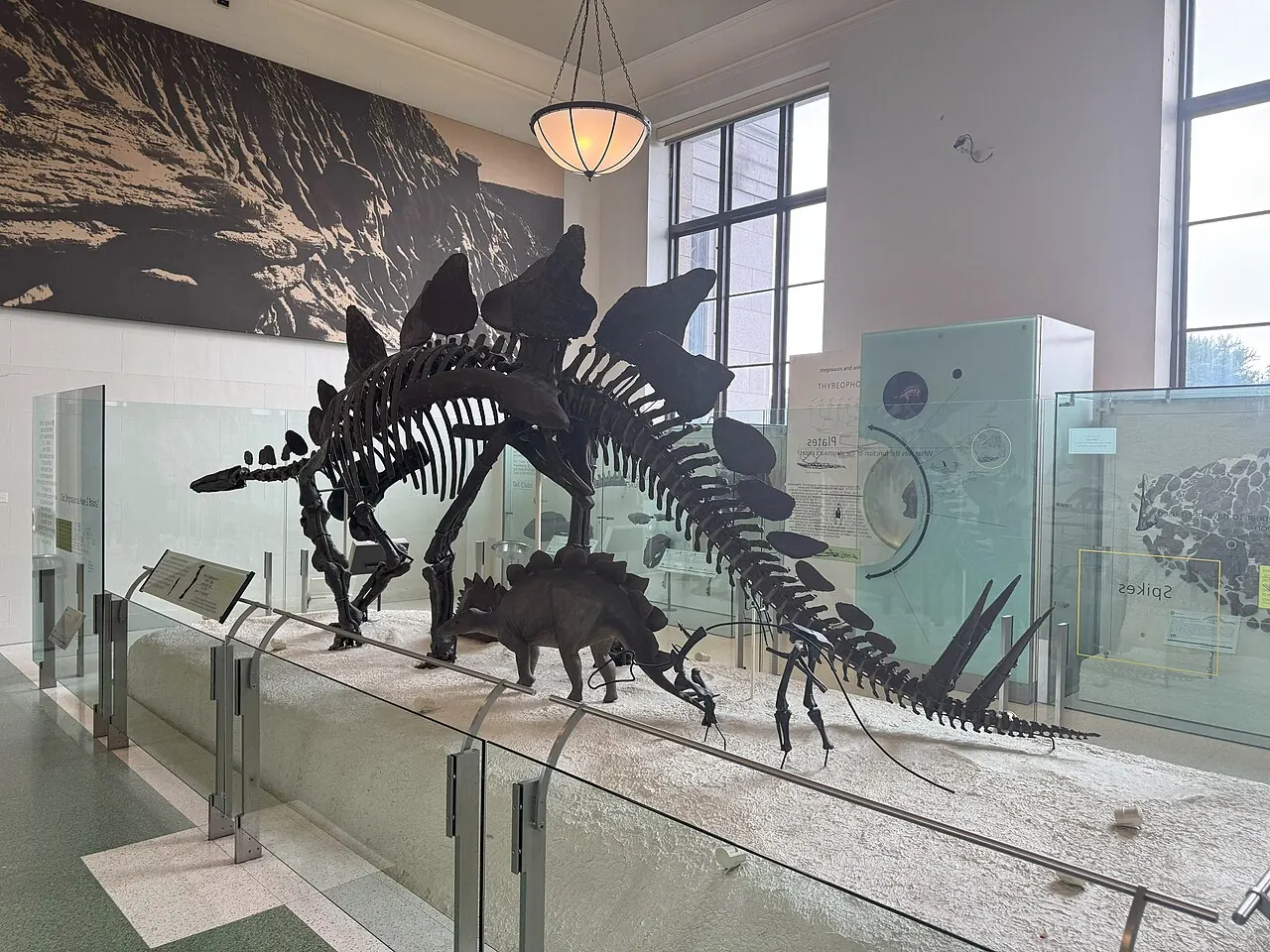
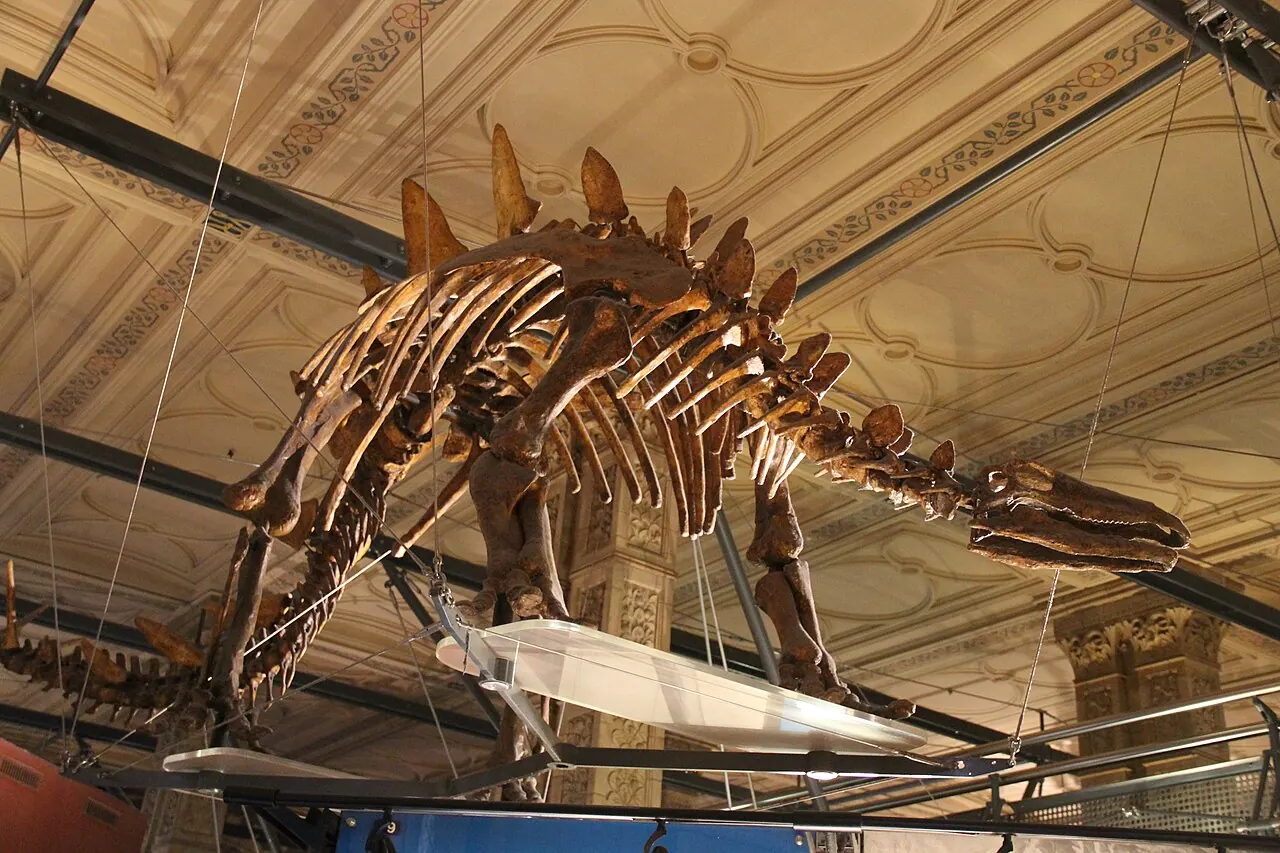
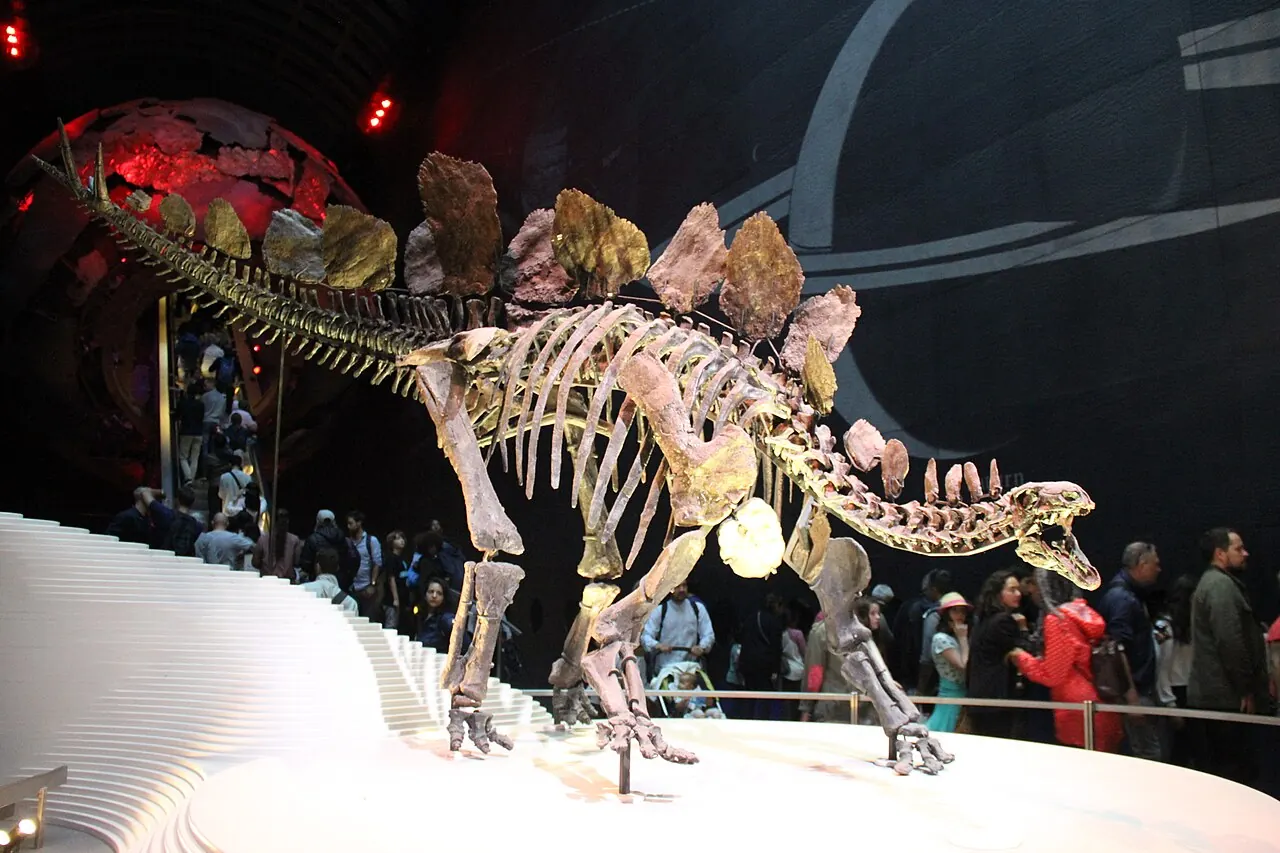
Photos are from Wikimedia Commons, used under the free licences shown. They have been resized, and cropped where they appear in link previews.
Low plants such as ferns, mosses and cycads, cropped with a small beak.
Many skeletons are known. Healed wounds in Allosaurus bones show that the tail spikes were really used.
Keep going
Animals from other periods live on their own pages: choose another.

.jpg)
.jpg)