A claw found by a plumber
In 1983 an amateur collector, William Walker, found a 30-centimetre claw in a Surrey clay pit.
The great hunters · Theropods
Heavy claw · BARE-ee-ON-ix
A long-snouted hunter with a crocodile-like head and a huge curved claw on each thumb.
Wades after you, snout low. Move your pointer and see.
To scale
The bars are drawn to the same scale. On these pages the animals are sized in proportion to each other as far as a screen allows: the giants are shrunk a little and the smallest are enlarged, so that you can see them all.
Good to know
In 1983 an amateur collector, William Walker, found a 30-centimetre claw in a Surrey clay pit.
Fish scales and the bones of a young Iguanodon were found inside its ribs.
Its long, narrow jaws held 96 teeth: twice as many as most meat-eaters.
It belongs to the same fish-eating family.
It lived when southern England was a land of rivers and lagoons.
It is one of the most complete meat-eating dinosaur skeletons found in Britain.
The real thing
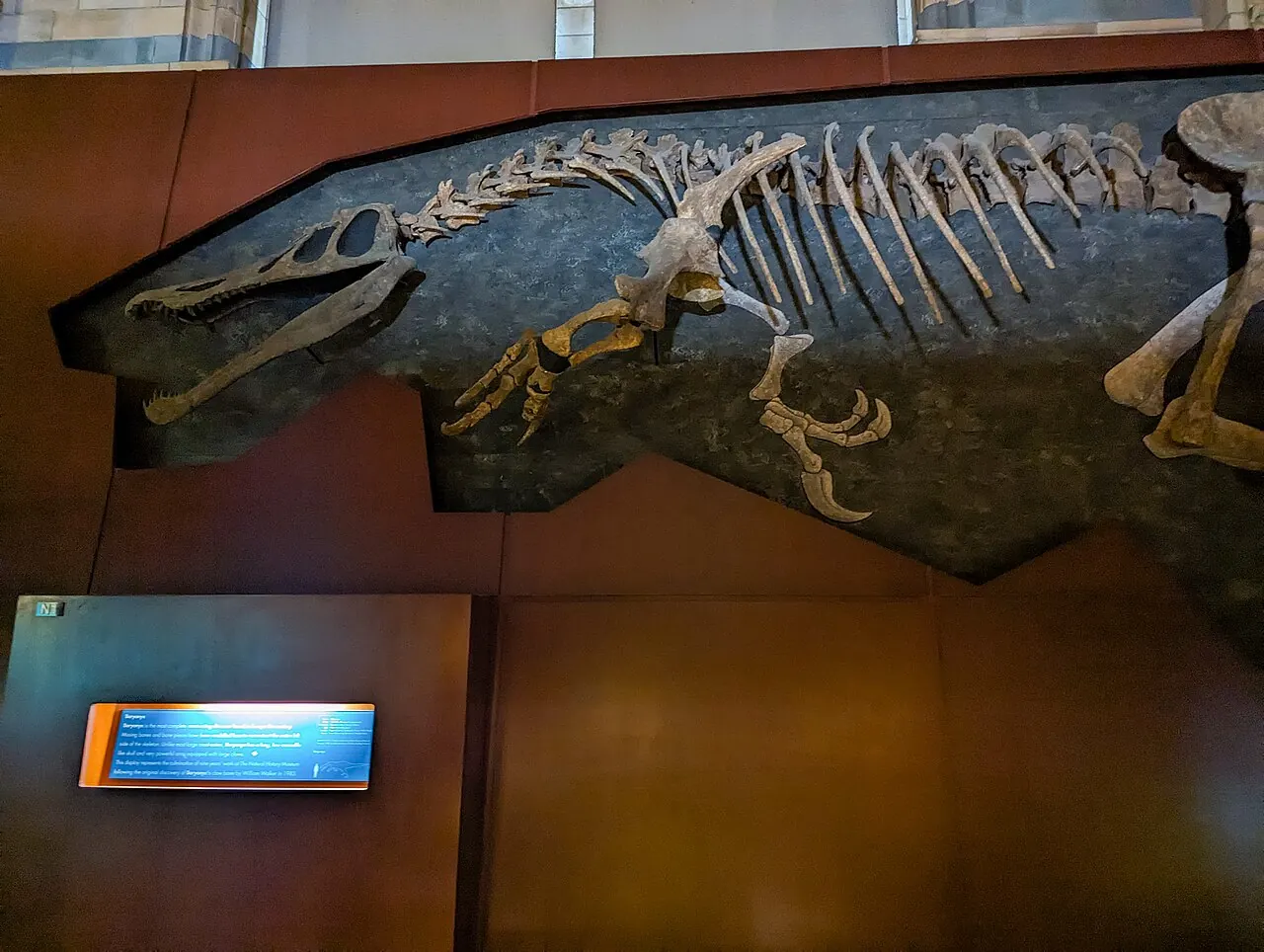
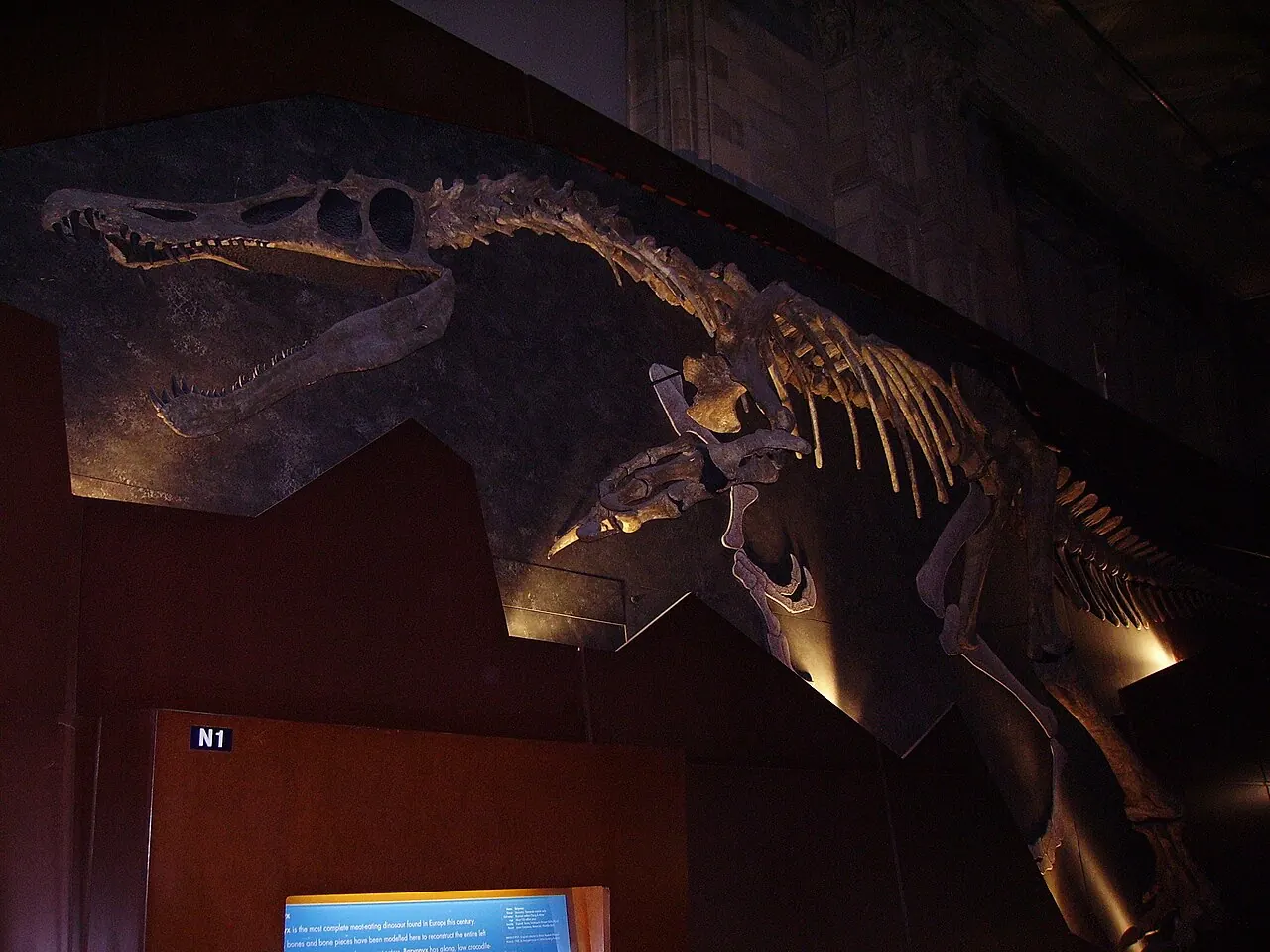
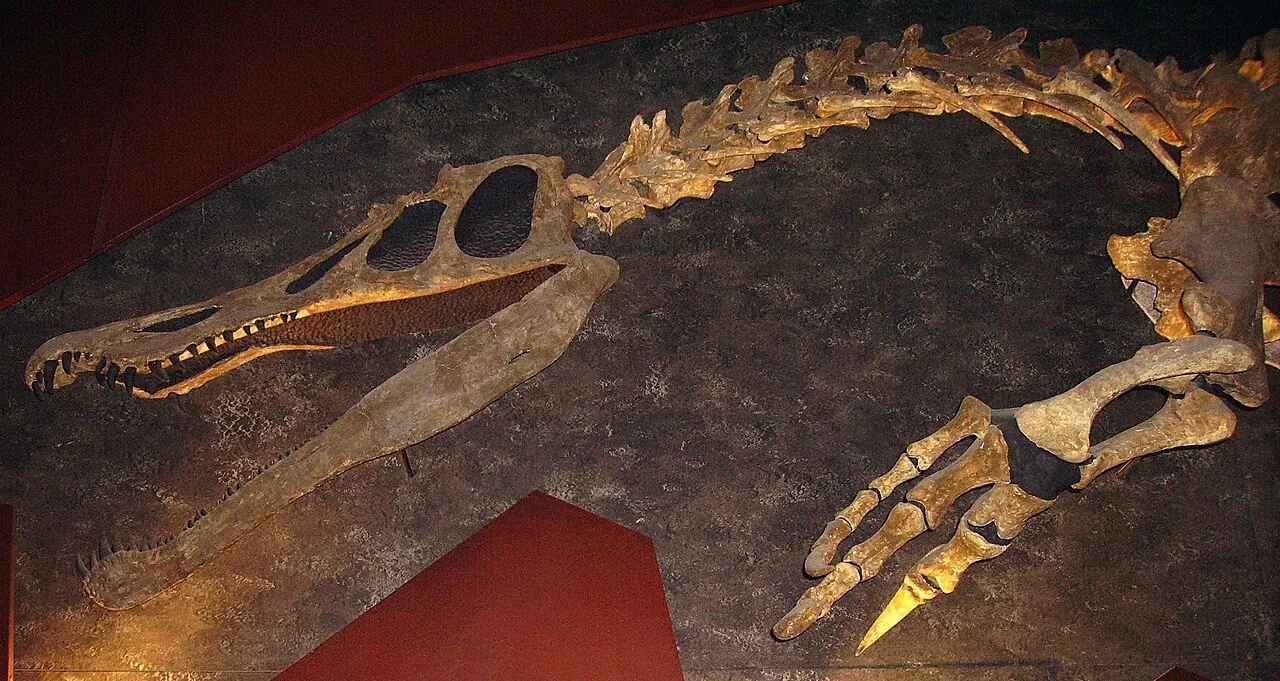
Photos are from Wikimedia Commons, used under the free licences shown. They have been resized, and cropped where they appear in link previews.
Fish, hooked from the water with its claws or snatched in its jaws, and sometimes other dinosaurs.
The skeleton is in the Natural History Museum in London, and its last meal was found with it.
Keep going
Animals from other periods live on their own pages: choose another.


