The strongest bite on land
Its bite was the most powerful of any land animal known. It could crush bone.
The great hunters · Theropods
Tyrant lizard king · tie-RAN-oh-SORE-us REX
A huge hunter with an enormous head, teeth the size of bananas, powerful hind legs and tiny two-fingered arms.
Stomps after you, head low. Move your pointer and see.
To scale
The bars are drawn to the same scale. On these pages the animals are sized in proportion to each other as far as a screen allows: the giants are shrunk a little and the smallest are enlarged, so that you can see them all.
Good to know
Its bite was the most powerful of any land animal known. It could crush bone.
Its arms were only about a metre long, but each could probably lift a couple of hundred kilograms.
The biggest teeth were around 20 centimetres long, counting the root.
The most complete skeletons have nicknames. Sue, in Chicago, is about 90 per cent complete.
It lived right at the end, and was there when the asteroid struck.
It had forward-facing eyes for judging distance, and an excellent sense of smell.
The real thing
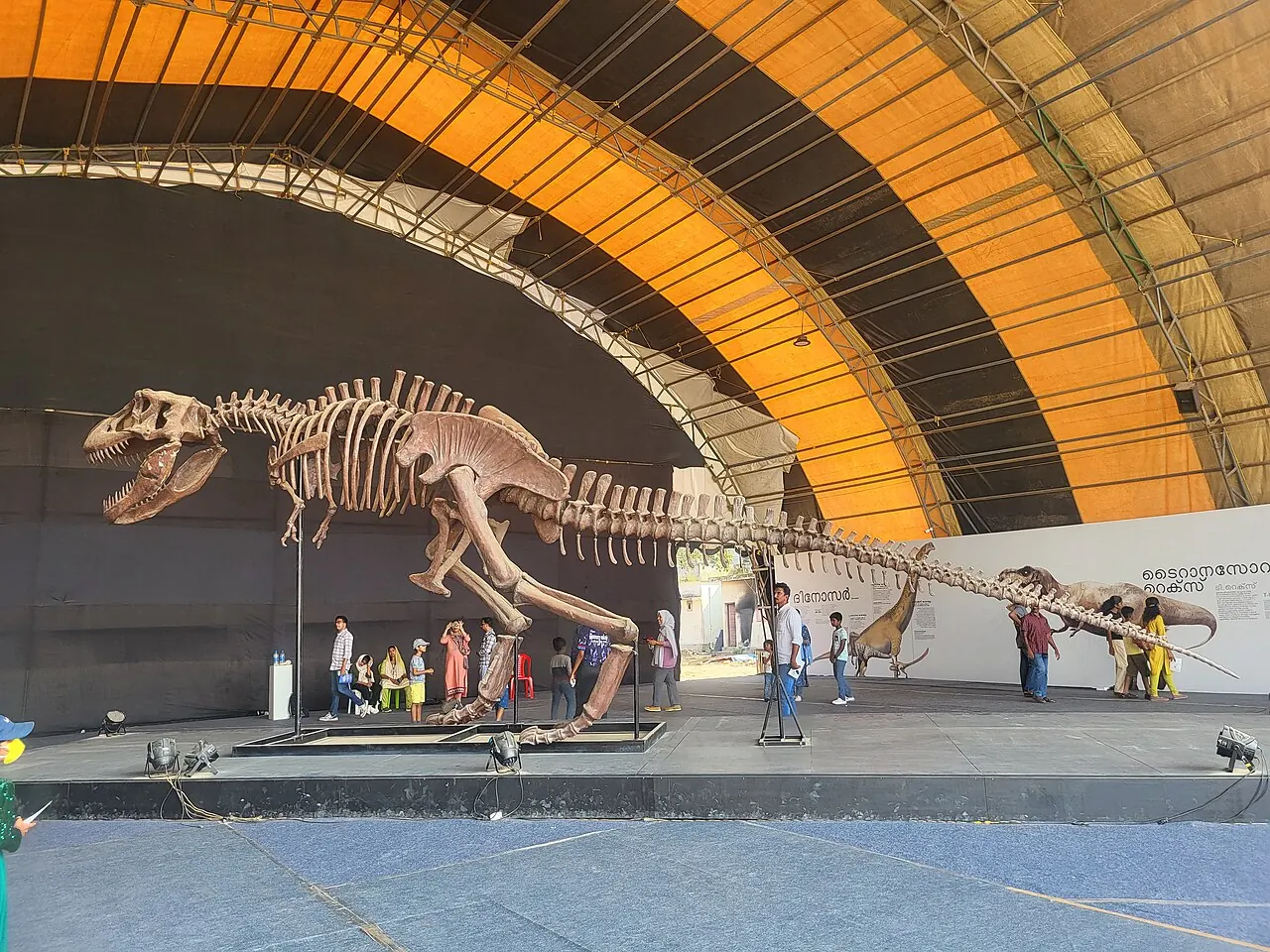
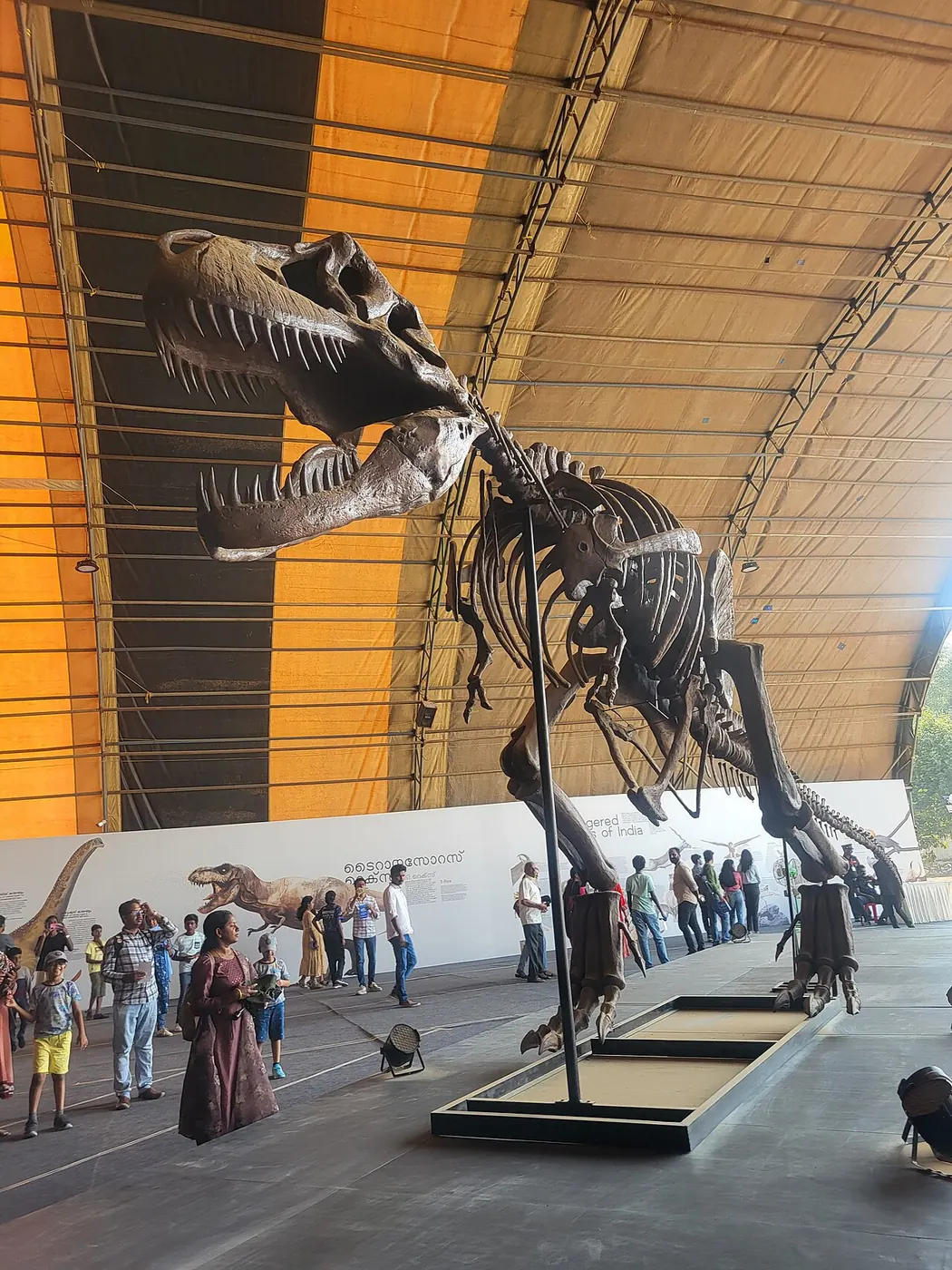
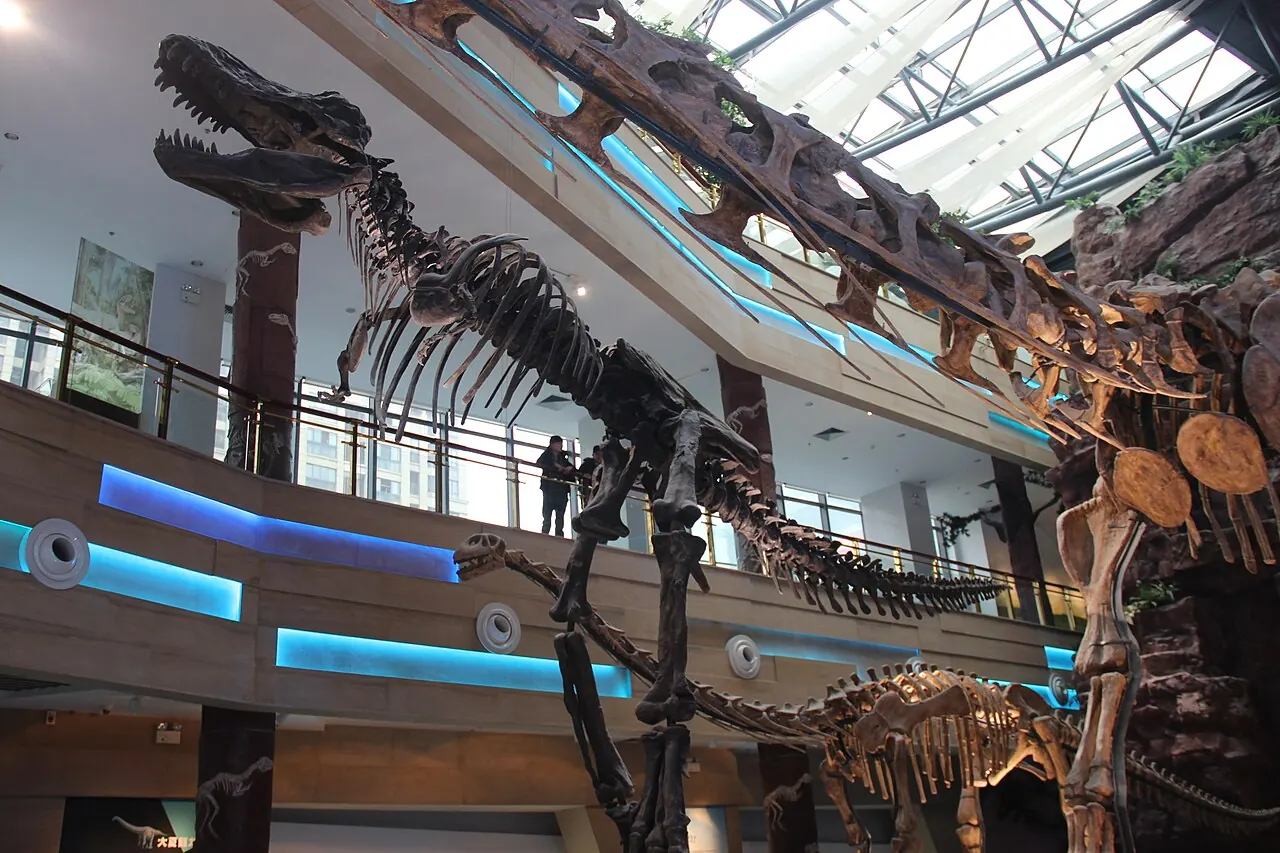
Photos are from Wikimedia Commons, used under the free licences shown. They have been resized, and cropped where they appear in link previews.
Large plant-eaters such as Triceratops and Edmontosaurus. It hunted, and it also ate animals it found dead.
More than fifty skeletons are known. Triceratops bones carry its tooth marks, and some had healed, so the prey was alive when bitten.
Keep going
Animals from other periods live on their own pages: choose another.


.jpg)