Found by Mary Anning
She discovered it at Lyme Regis in 1828. It was the first pterosaur found outside Germany.
In the air · Flying reptiles
Two-form tooth · die-MOR-foe-don
A small flying reptile with a big, deep head, a long tail and two different kinds of teeth.
Flaps after you. Move your pointer and see.
To scale
The bars are drawn to the same scale. On these pages the animals are sized in proportion to each other as far as a screen allows: the giants are shrunk a little and the smallest are enlarged, so that you can see them all.
Good to know
She discovered it at Lyme Regis in 1828. It was the first pterosaur found outside Germany.
Its skull was large and deep but very light, with big openings in the bone.
Long fangs at the front and many tiny teeth behind give it its name.
Strong claws on its hands and feet suggest it scrambled about on cliffs and trees.
Its teeth and jaws suggest it snapped up insects and small animals on land.
With short wings for its weight, it probably flew in brief bursts.
The real thing
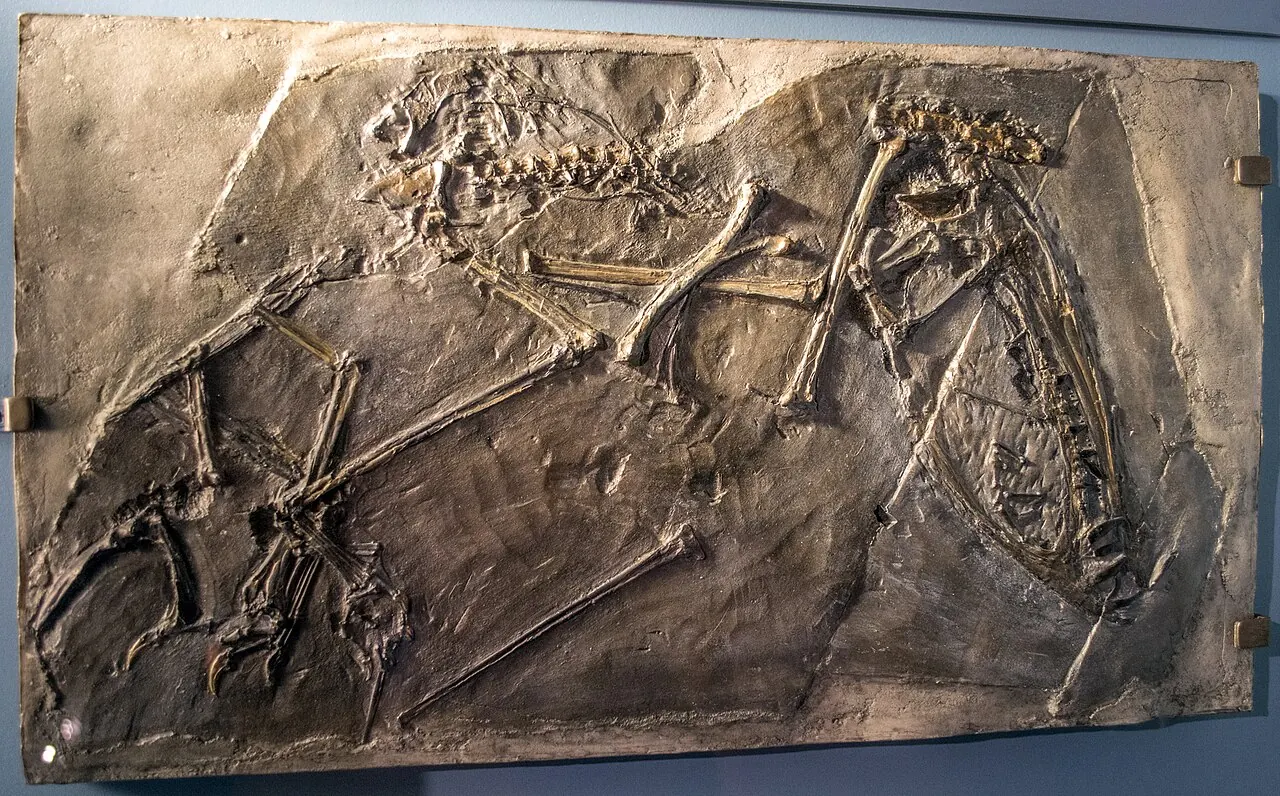
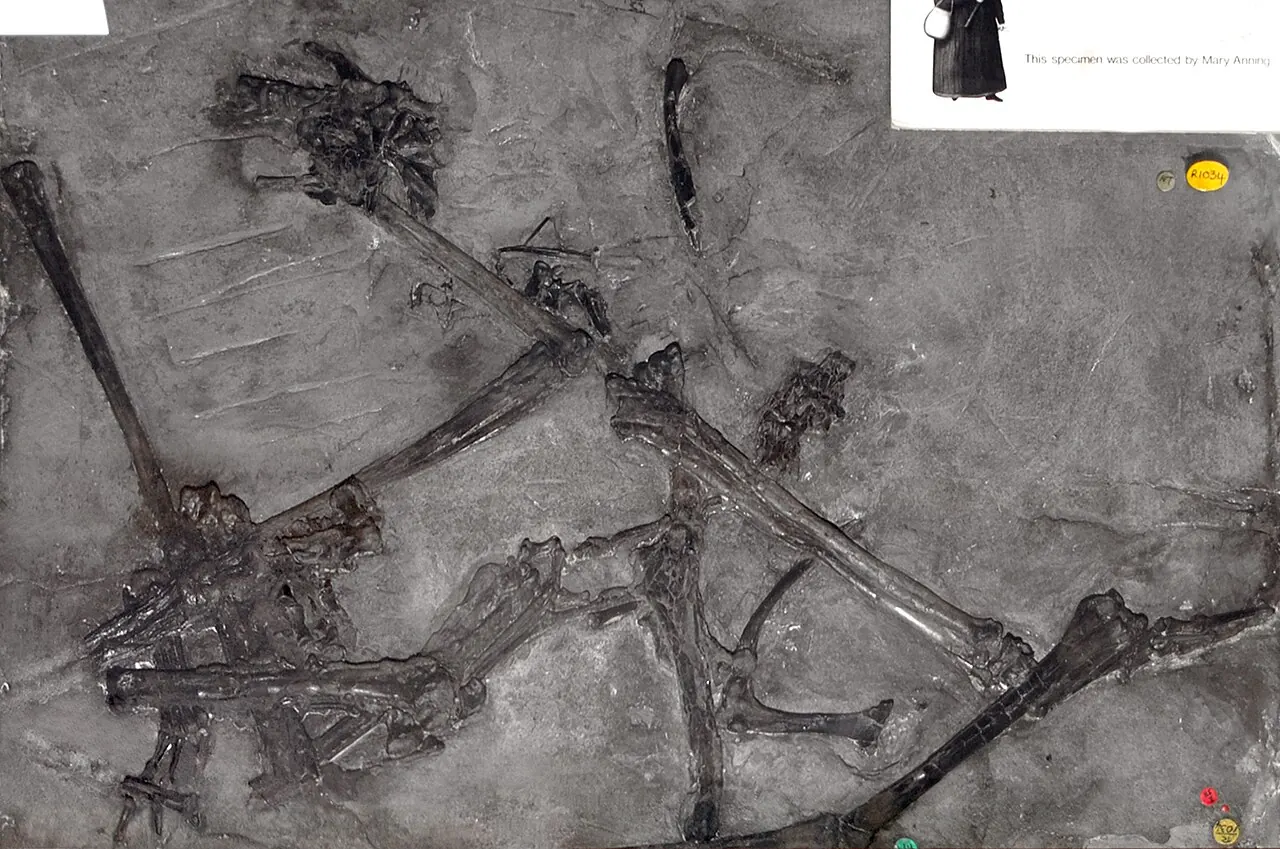
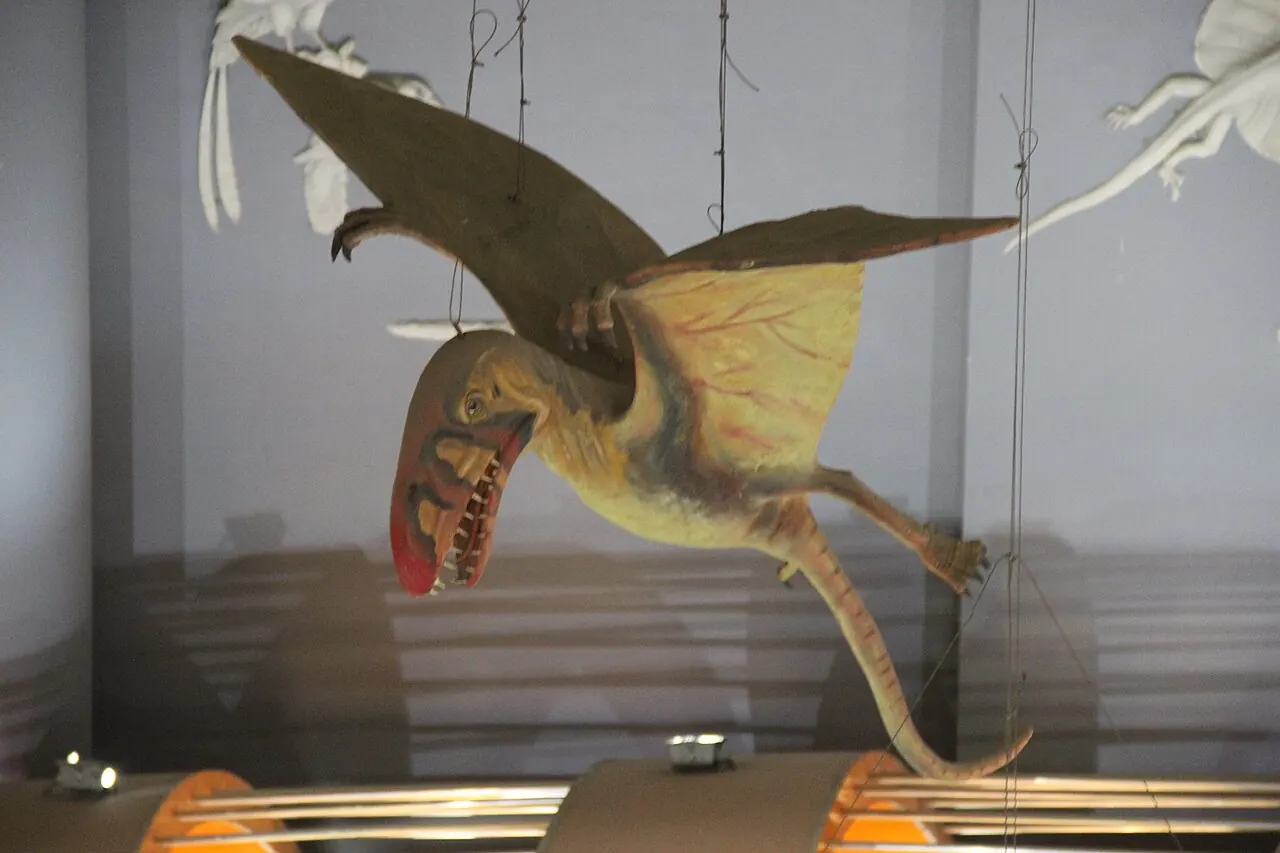
Photos are from Wikimedia Commons, used under the free licences shown. They have been resized, and cropped where they appear in link previews.
Insects, lizards and other small animals.
The Dorset skeletons are in the Natural History Museum in London.
Keep going
In the sea live on their own page: choosing one takes you there.
Animals from other periods live on their own pages: choose another.


