A crest like a sail
A bony prong at the front and one at the back held up a sheet of skin, taller than the head was long.
In the air · Flying reptiles
The old being · TAP-eh-JAR-ah
A flying reptile with a short, down-turned toothless beak and an enormous sail-like crest on its head.
Sails after you. Move your pointer and see.
To scale
The bars are drawn to the same scale. On these pages the animals are sized in proportion to each other as far as a screen allows: the giants are shrunk a little and the smallest are enlarged, so that you can see them all.
Good to know
A bony prong at the front and one at the back held up a sheet of skin, taller than the head was long.
The crest was almost certainly brightly coloured, for display.
Its short, toothless beak may have been for eating fruit and seeds.
The name comes from the Tupi people's language.
The Brazilian fossils are not squashed flat, so the full shape of the skull is known.
Some think the crest helped it steer. From above, as drawn here, you see it edge-on.
The real thing
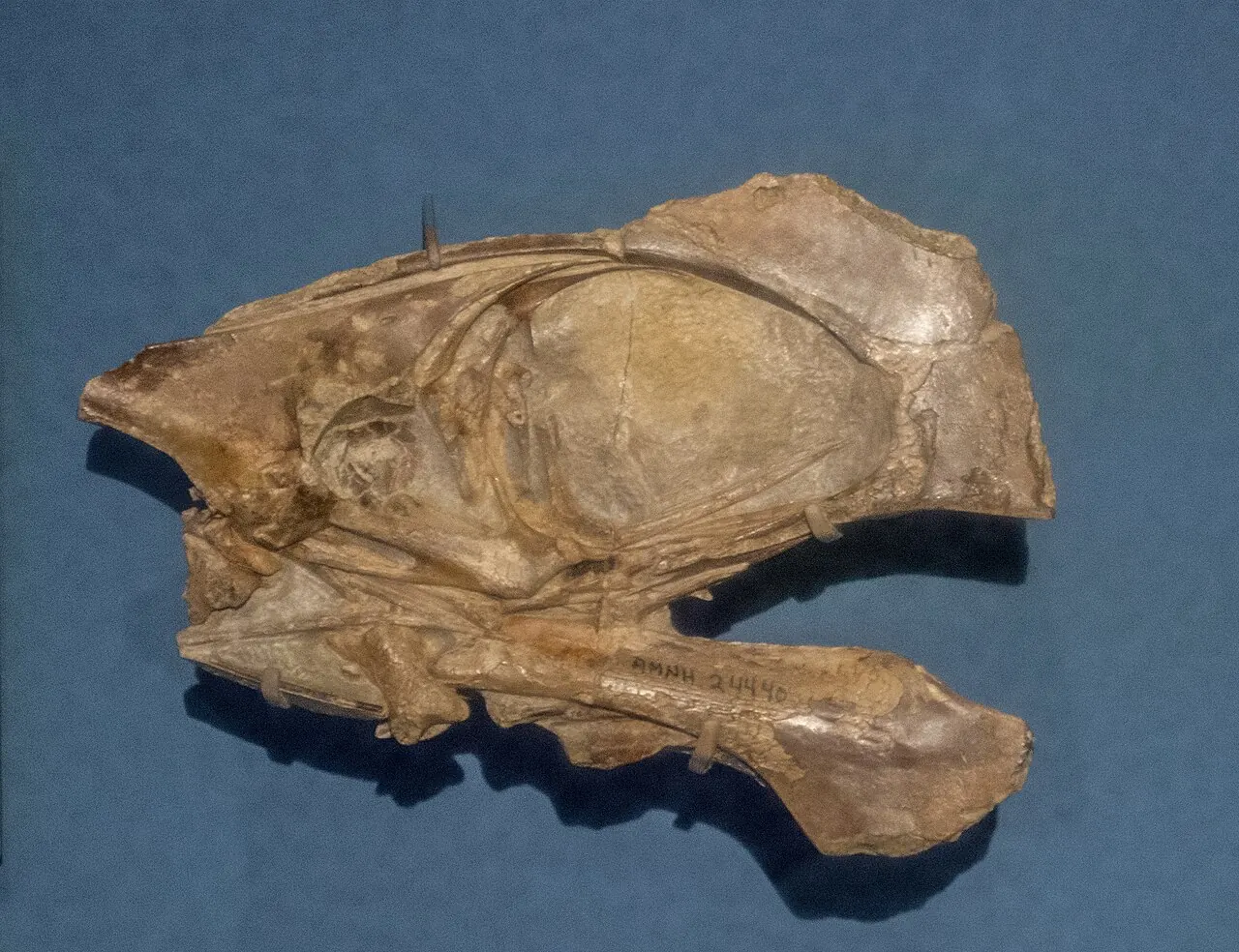
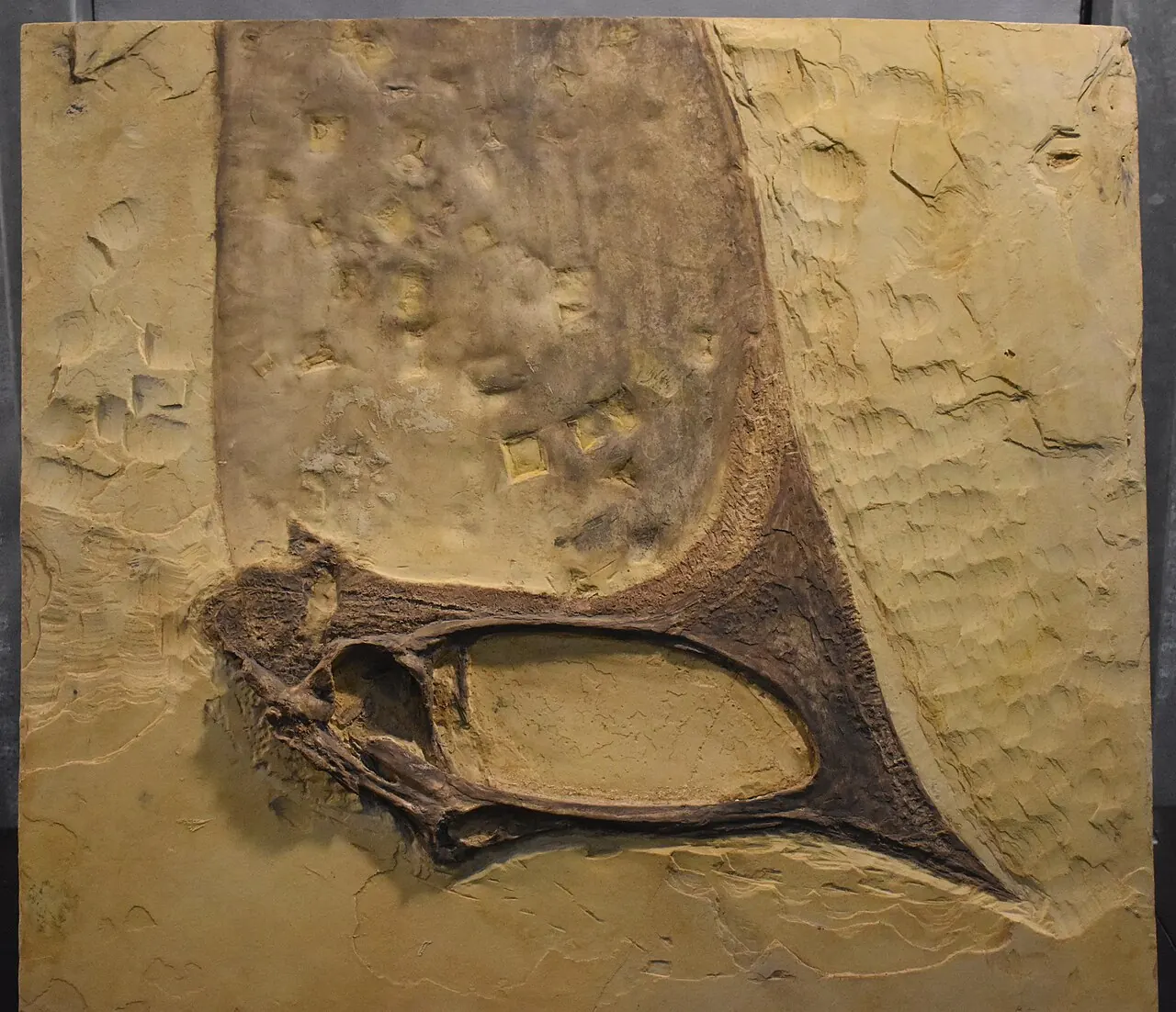
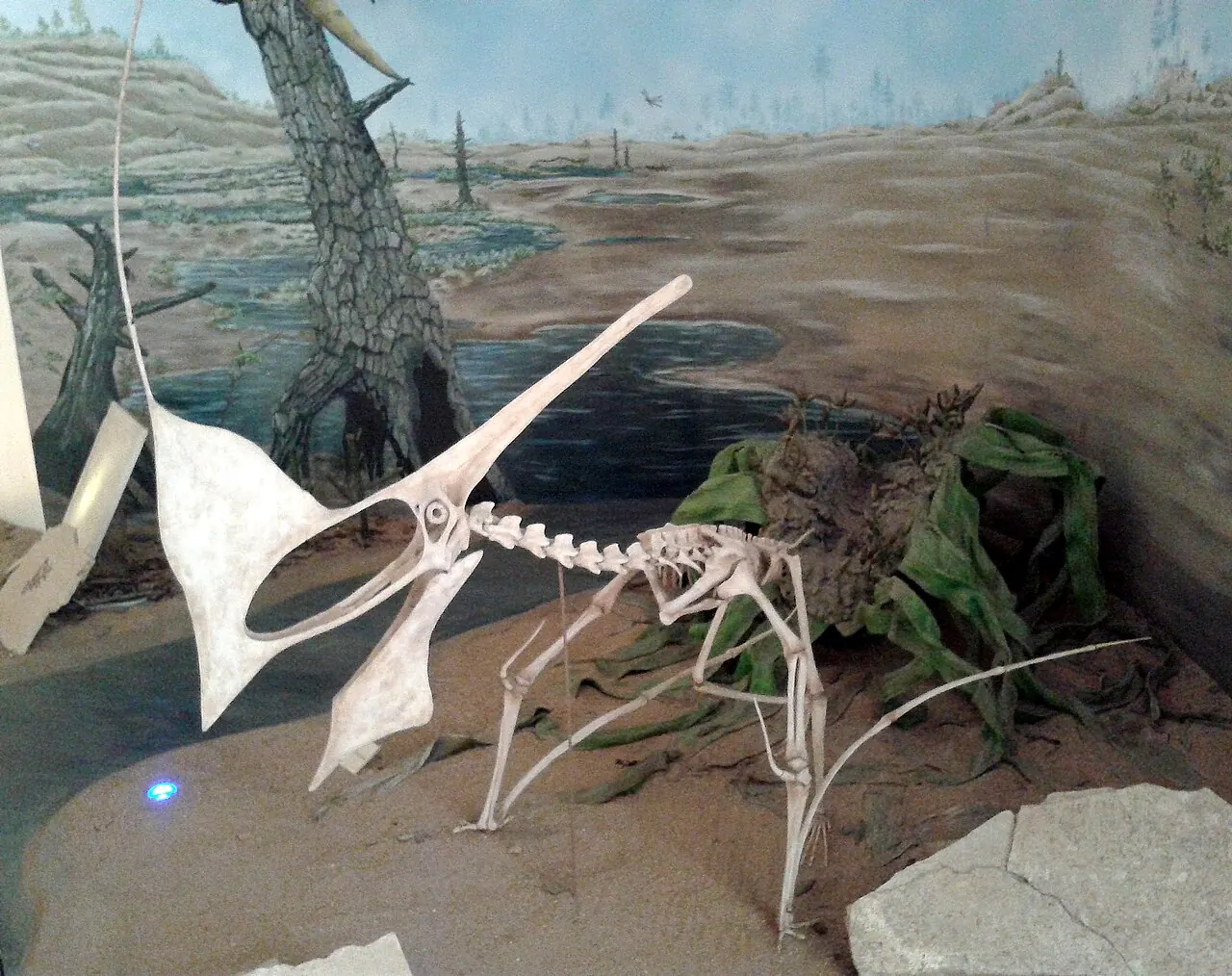
Photos are from Wikimedia Commons, used under the free licences shown. They have been resized, and cropped where they appear in link previews.
Probably fruit and seeds, and perhaps small animals.
It comes from limestone in Brazil that preserves soft parts such as the crest.
Keep going
In the sea live on their own page: choosing one takes you there.
Animals from other periods live on their own pages: choose another.


