A rudder on its tail
The stiff tail ended in a diamond-shaped flap of skin, which changed shape as the animal grew up.
In the air · Flying reptiles
Beak snout · RAM-foe-RINK-us
A small flying reptile with a long tail ending in a diamond-shaped vane, and jaws of forward-pointing teeth.
Flaps after you, tail streaming. Move your pointer and see.
To scale
The bars are drawn to the same scale. On these pages the animals are sized in proportion to each other as far as a screen allows: the giants are shrunk a little and the smallest are enlarged, so that you can see them all.
Good to know
The stiff tail ended in a diamond-shaped flap of skin, which changed shape as the animal grew up.
Its long teeth pointed forwards and outwards, and meshed together to hold slippery fish.
One fossil shows a Rhamphorhynchus with its wing in the jaws of a large fish. Both died.
Fossils from Solnhofen show the wing membrane and its stiffening fibres.
The bones around its eyes suggest it may have been active at night.
Even the youngest had fully formed wings, so they could probably fly soon after hatching.
The real thing
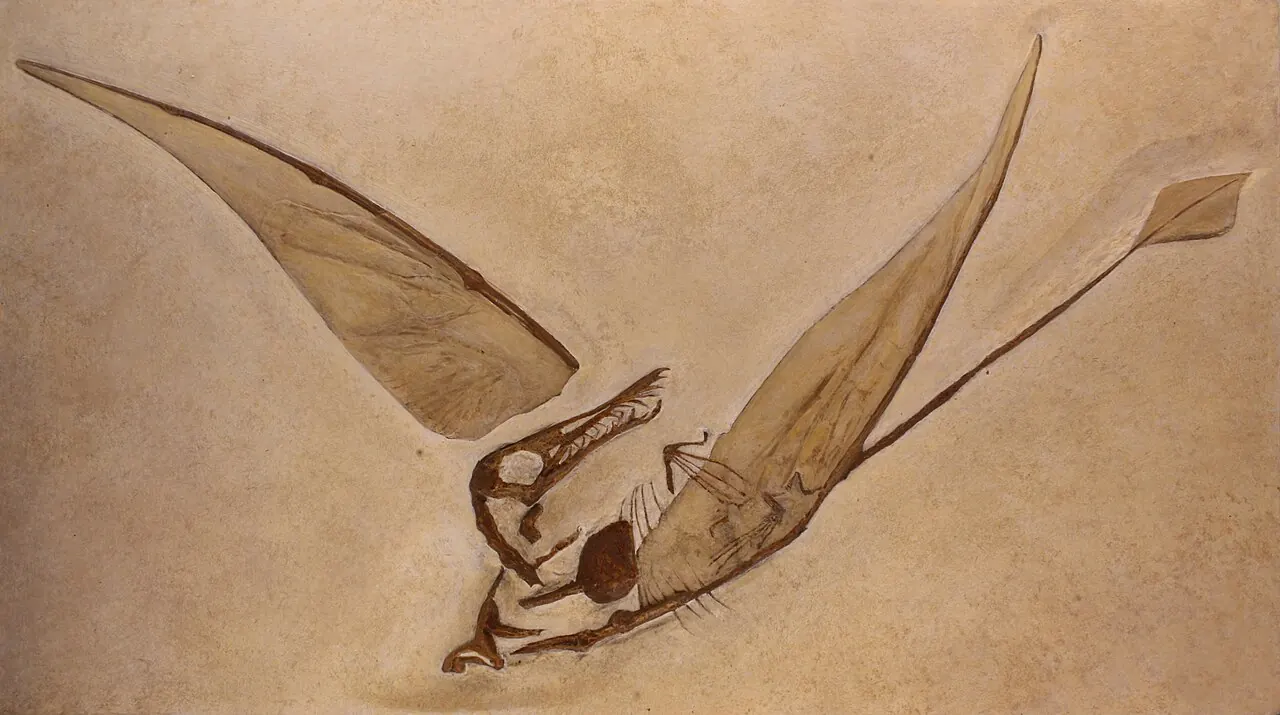
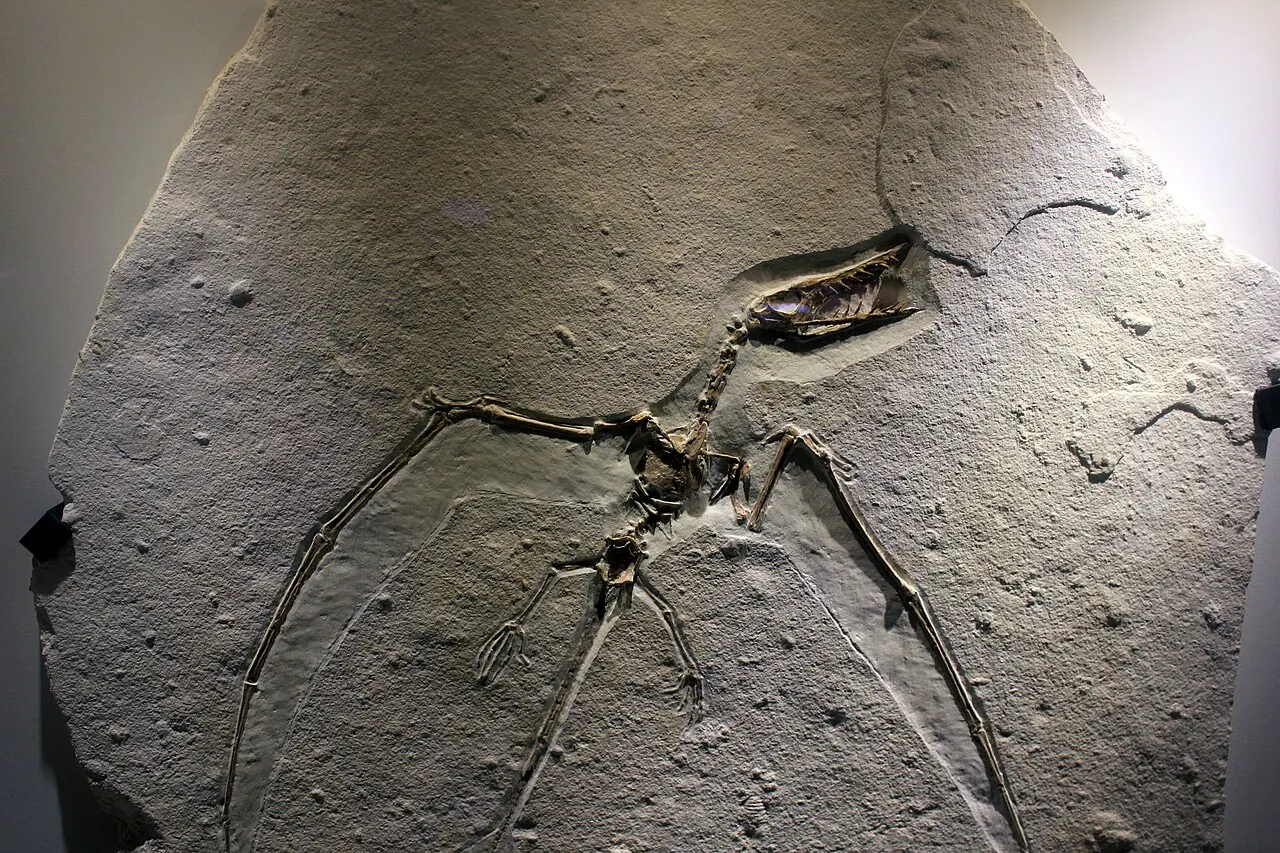
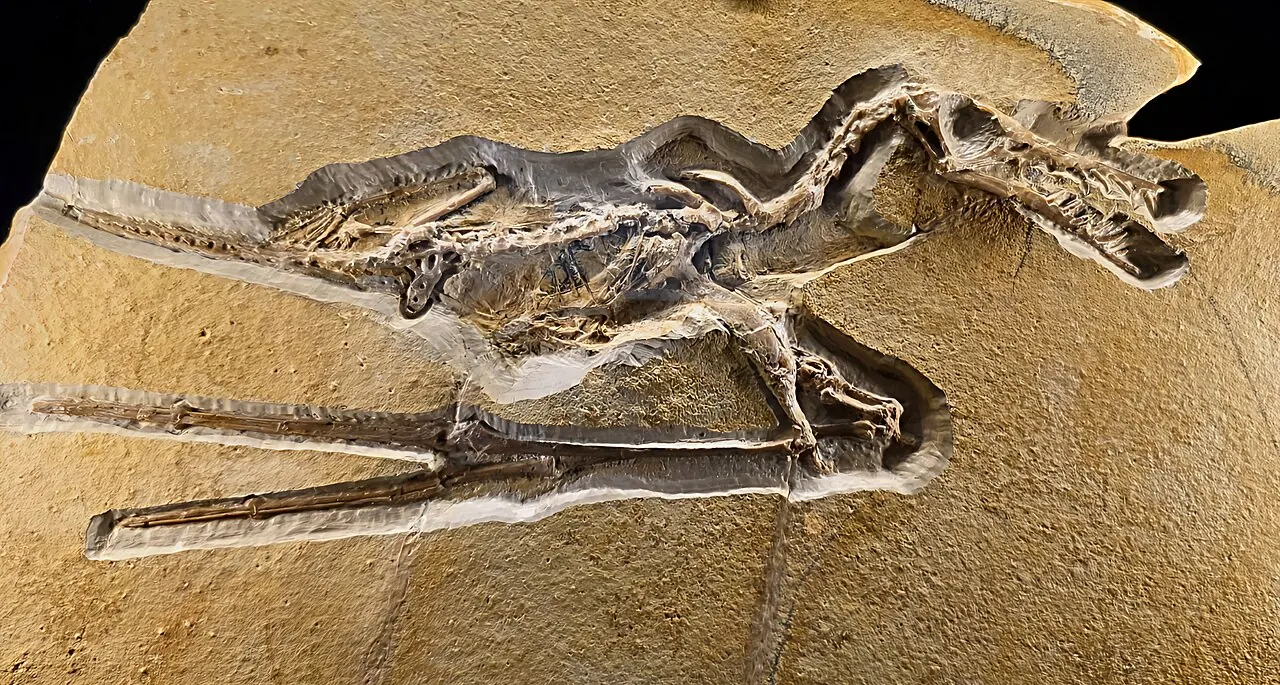
Photos are from Wikimedia Commons, used under the free licences shown. They have been resized, and cropped where they appear in link previews.
Fish and squid.
More than a hundred skeletons are known, of all ages.
Keep going
In the sea live on their own page: choosing one takes you there.
Animals from other periods live on their own pages: choose another.


_aus_Solnhofen_in_Bayern_01.jpg)