The first pterosaur ever found
It was described in 1784. At first nobody knew what it was: some thought it swam with its arms.
In the air · Flying reptiles
Its real name is Pterodactylus · Winged finger · TEH-roe-DAK-til-us
A small flying reptile with a long, narrow beak full of small teeth, a short tail and a low crest.
Flits after you. Move your pointer and see.
To scale
The bars are drawn to the same scale. On these pages the animals are sized in proportion to each other as far as a screen allows: the giants are shrunk a little and the smallest are enlarged, so that you can see them all.
Good to know
It was described in 1784. At first nobody knew what it was: some thought it swam with its arms.
Its proper name is Pterodactylus. People shortened it to pterodactyl, and then used that word for every flying reptile. This is the real one.
Unlike earlier pterosaurs it had only a stub of a tail.
It had a low crest of skin on its head, which shows only in the best fossils.
Many of the fossils are of youngsters with wingspans of only 20 or 30 centimetres.
The bones around its eyes suggest it was active by day.
The real thing
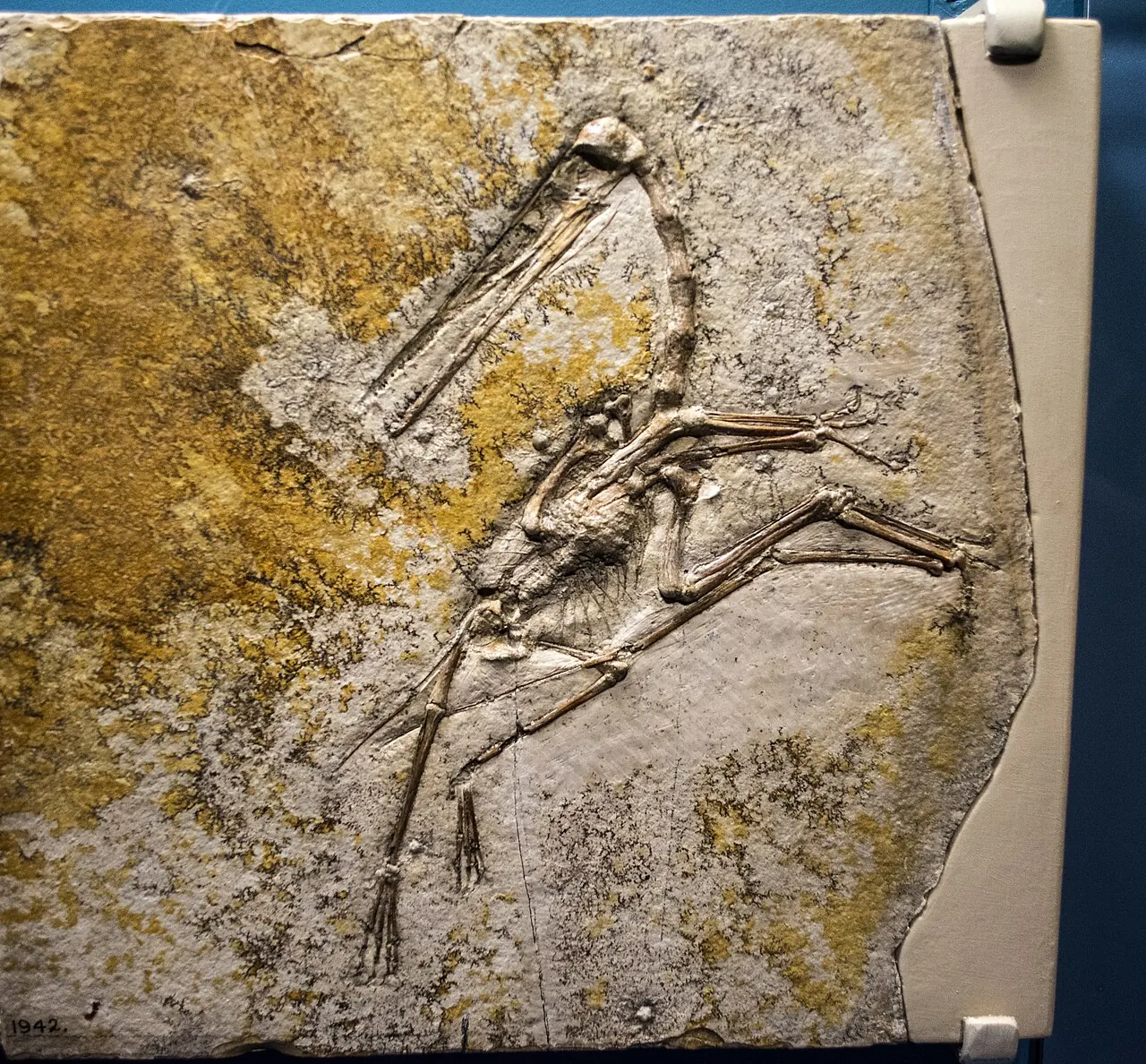
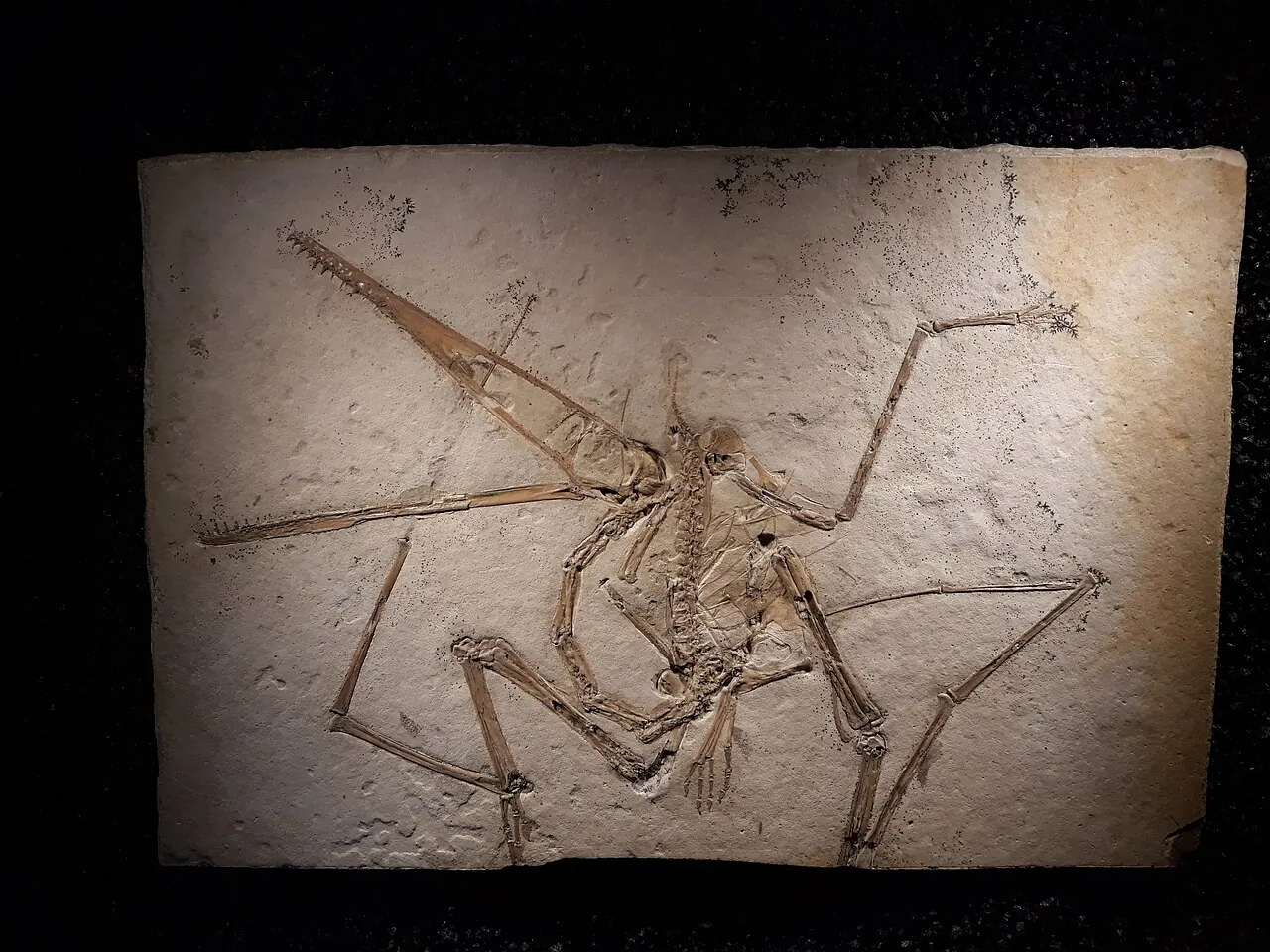
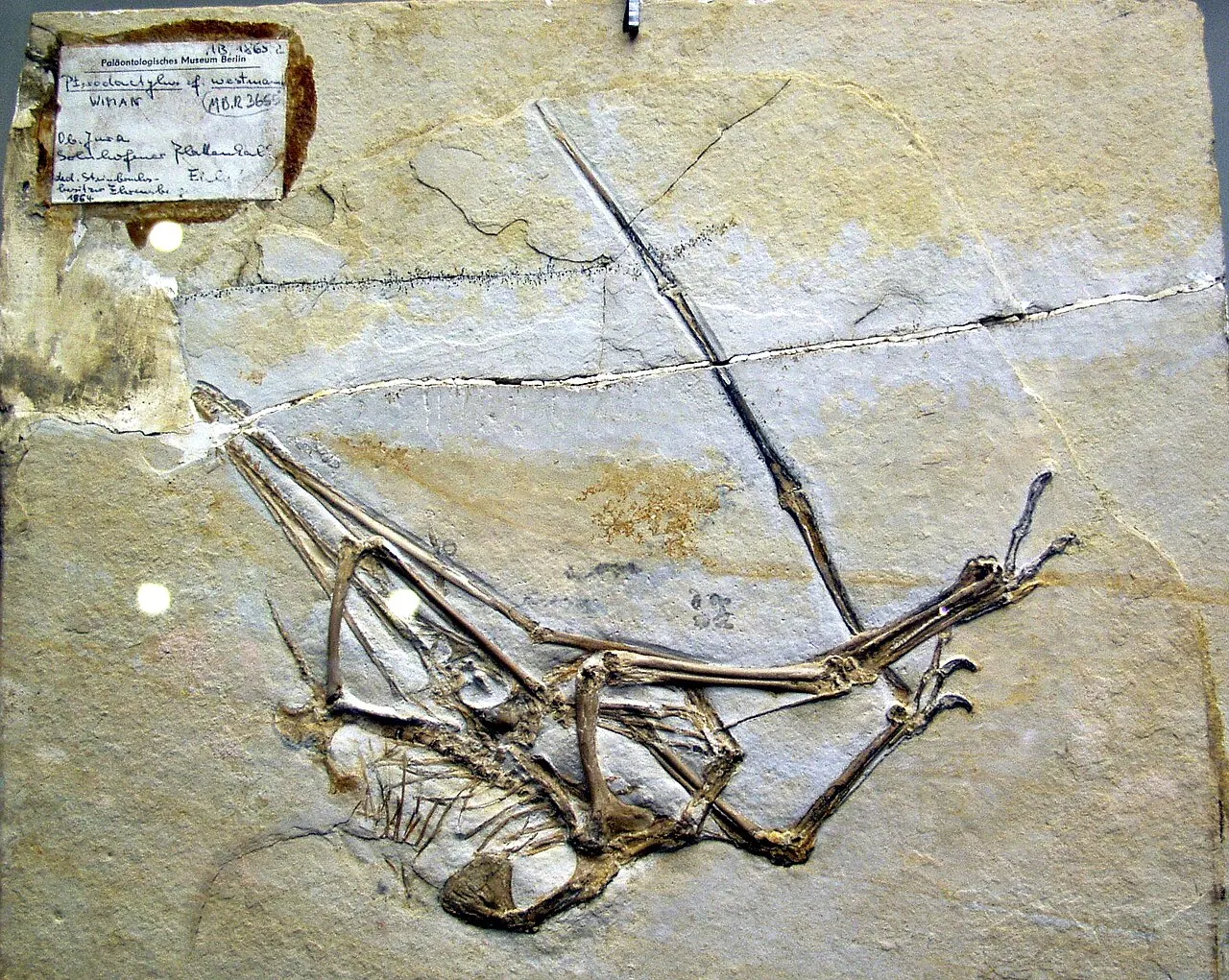
Photos are from Wikimedia Commons, used under the free licences shown. They have been resized, and cropped where they appear in link previews.
Small fish and other small animals, probed for in shallow water.
It comes from the same German limestone as Archaeopteryx.
Keep going
In the sea live on their own page: choosing one takes you there.
Animals from other periods live on their own pages: choose another.
.jpg)

