A wingspan of seven metres
That is twice the wingspan of the largest flying bird alive, the wandering albatross.
In the air · Flying reptiles
Winged and toothless · teh-RAN-oh-don
A large flying reptile with a long toothless beak and a long crest pointing back from its head.
Soars after you. Move your pointer and see.
To scale
The bars are drawn to the same scale. On these pages the animals are sized in proportion to each other as far as a screen allows: the giants are shrunk a little and the smallest are enlarged, so that you can see them all.
Good to know
That is twice the wingspan of the largest flying bird alive, the wandering albatross.
Its name means winged and toothless. It scooped fish in its long beak.
Males were larger, with long crests. Females were smaller, with short ones.
Its fossils are found in rocks that formed hundreds of miles from the nearest shore.
It is the best-known pterosaur of all.
For all its size, it probably weighed no more than a small adult.
The real thing
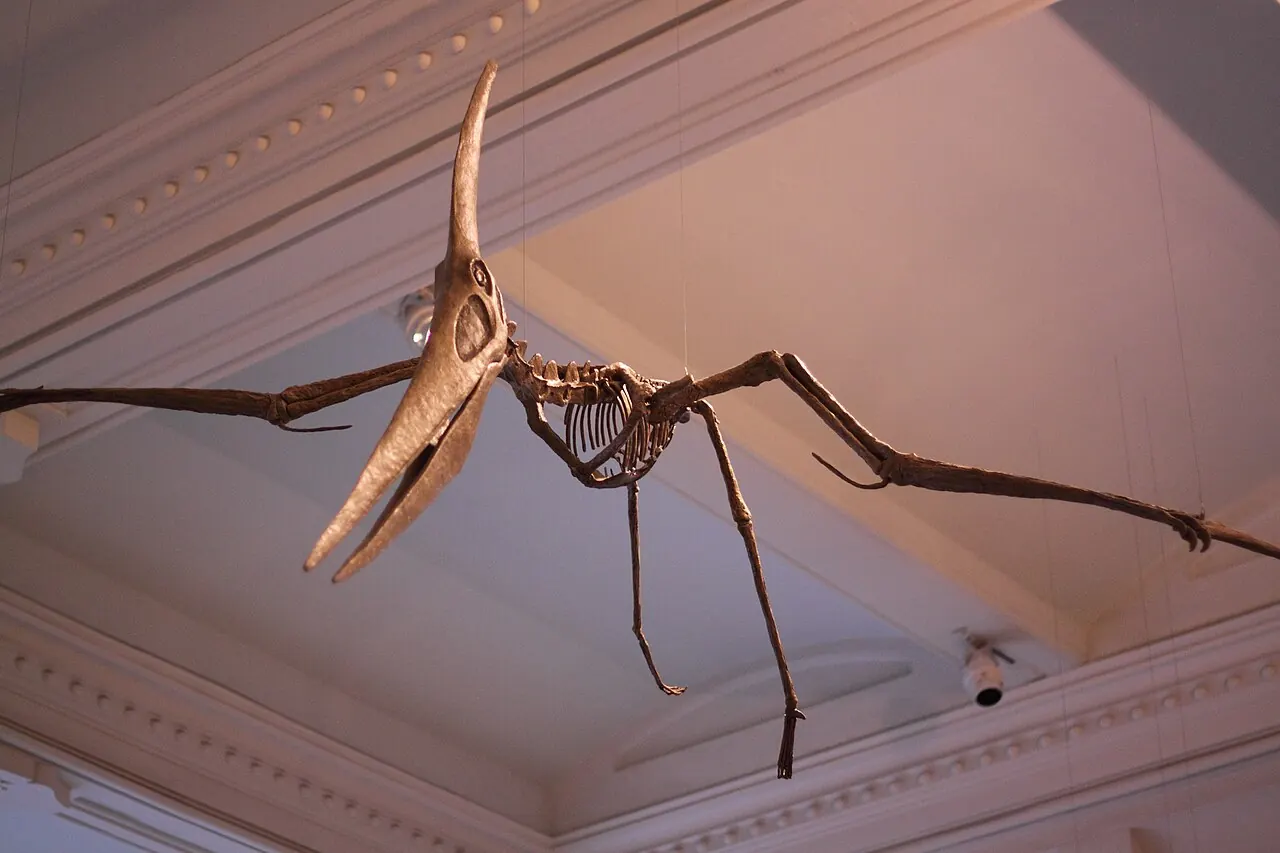
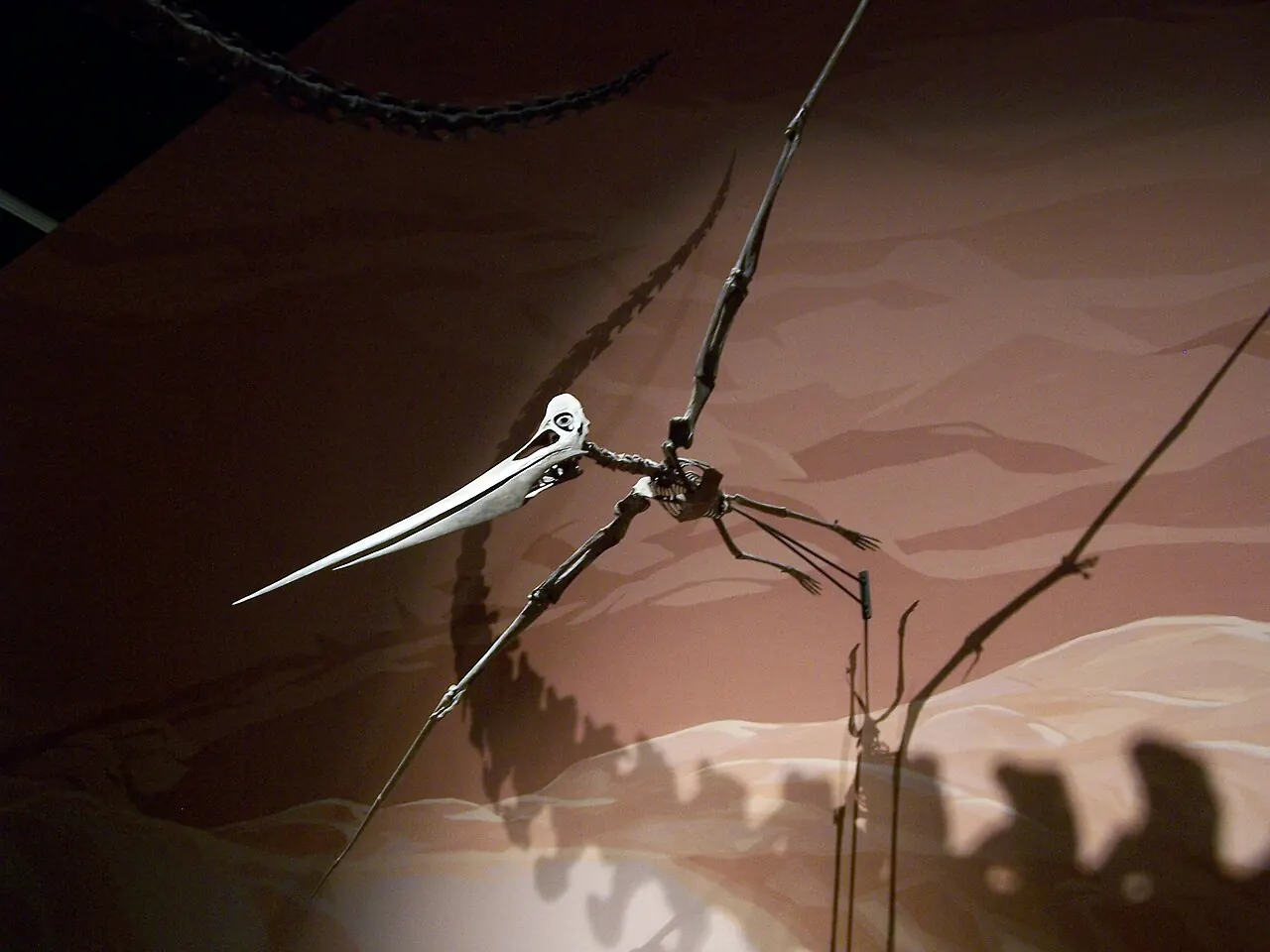
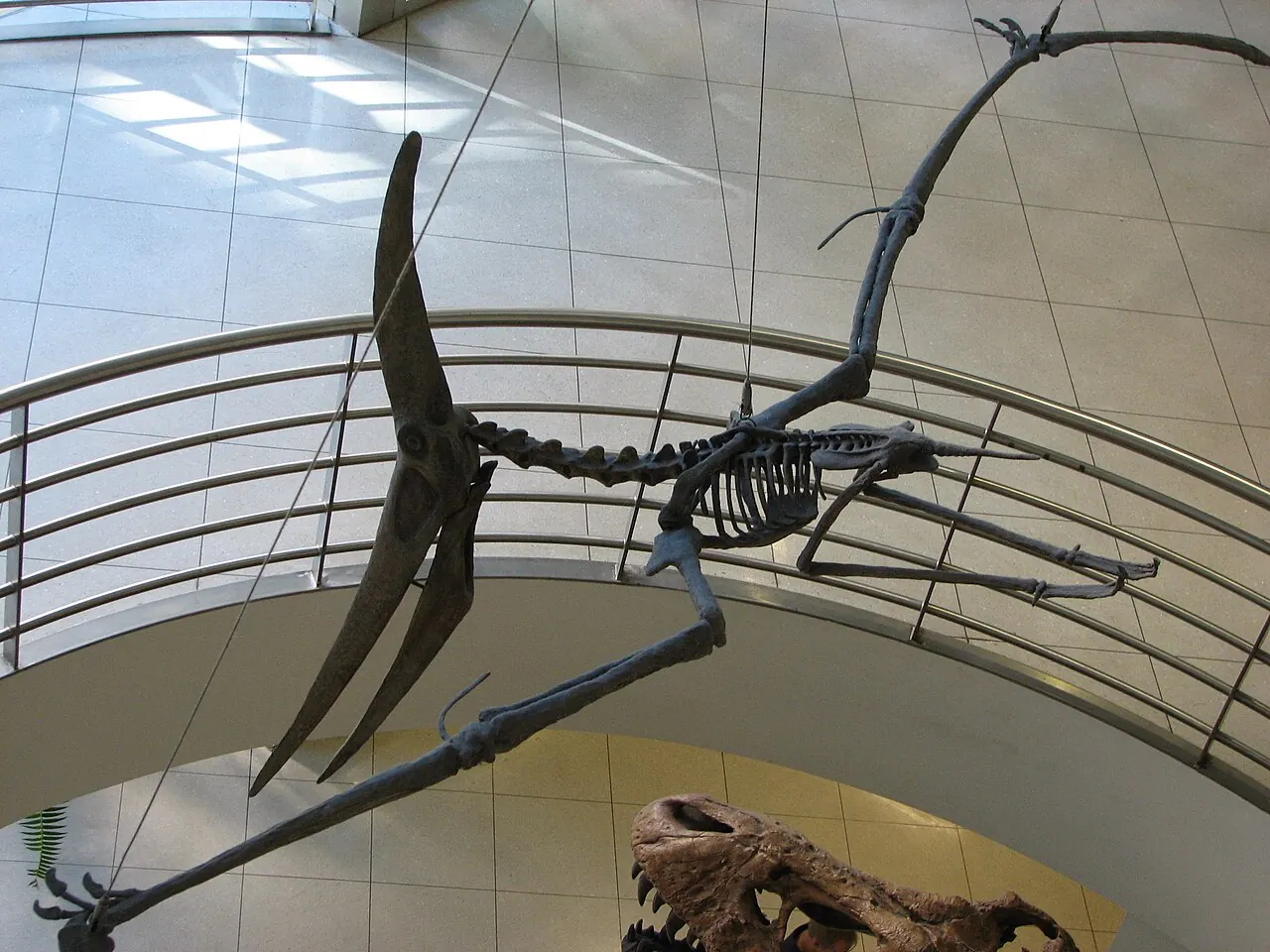
Photos are from Wikimedia Commons, used under the free licences shown. They have been resized, and cropped where they appear in link previews.
Fish, snatched from near the surface.
Fish bones have been found in the throat and stomach of some fossils.
Keep going
In the sea live on their own page: choosing one takes you there.
Animals from other periods live on their own pages: choose another.


